
Last updated November 16, 2026
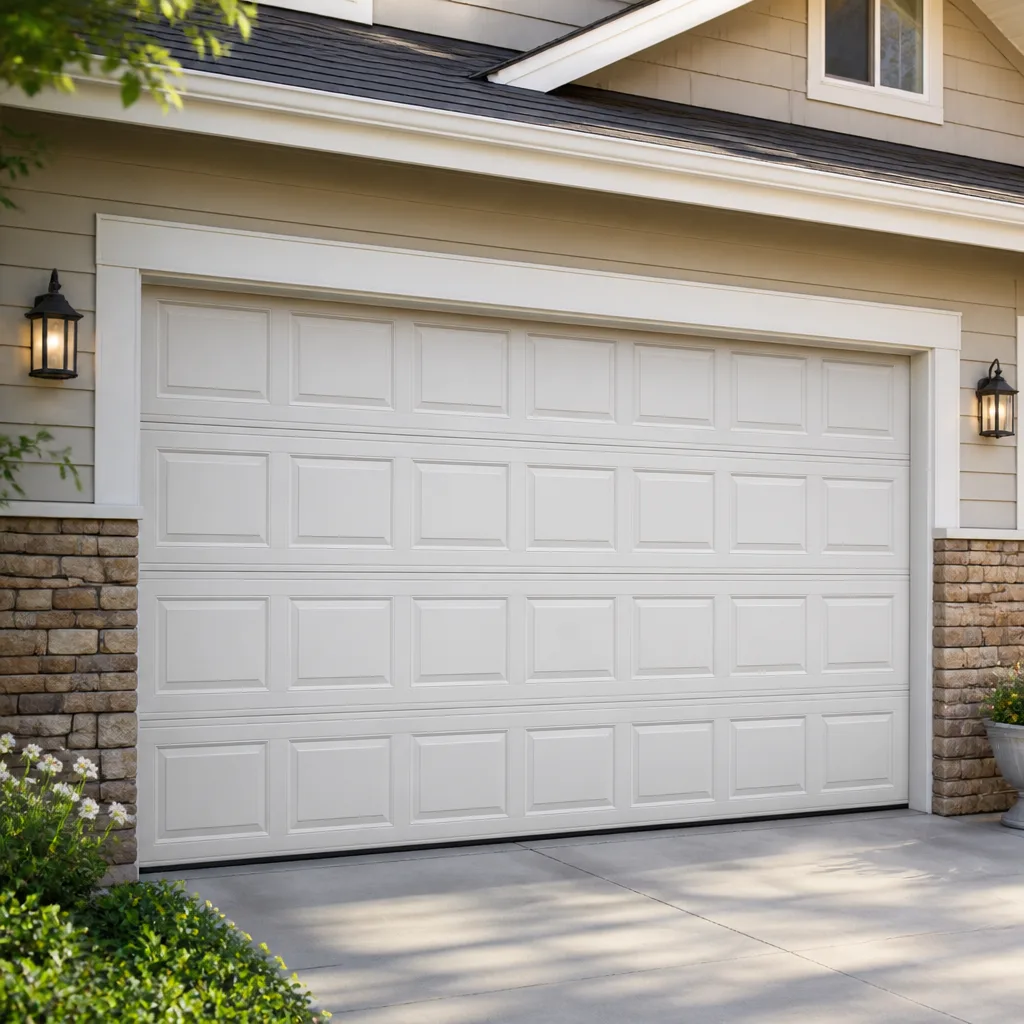 Raised-panel steel
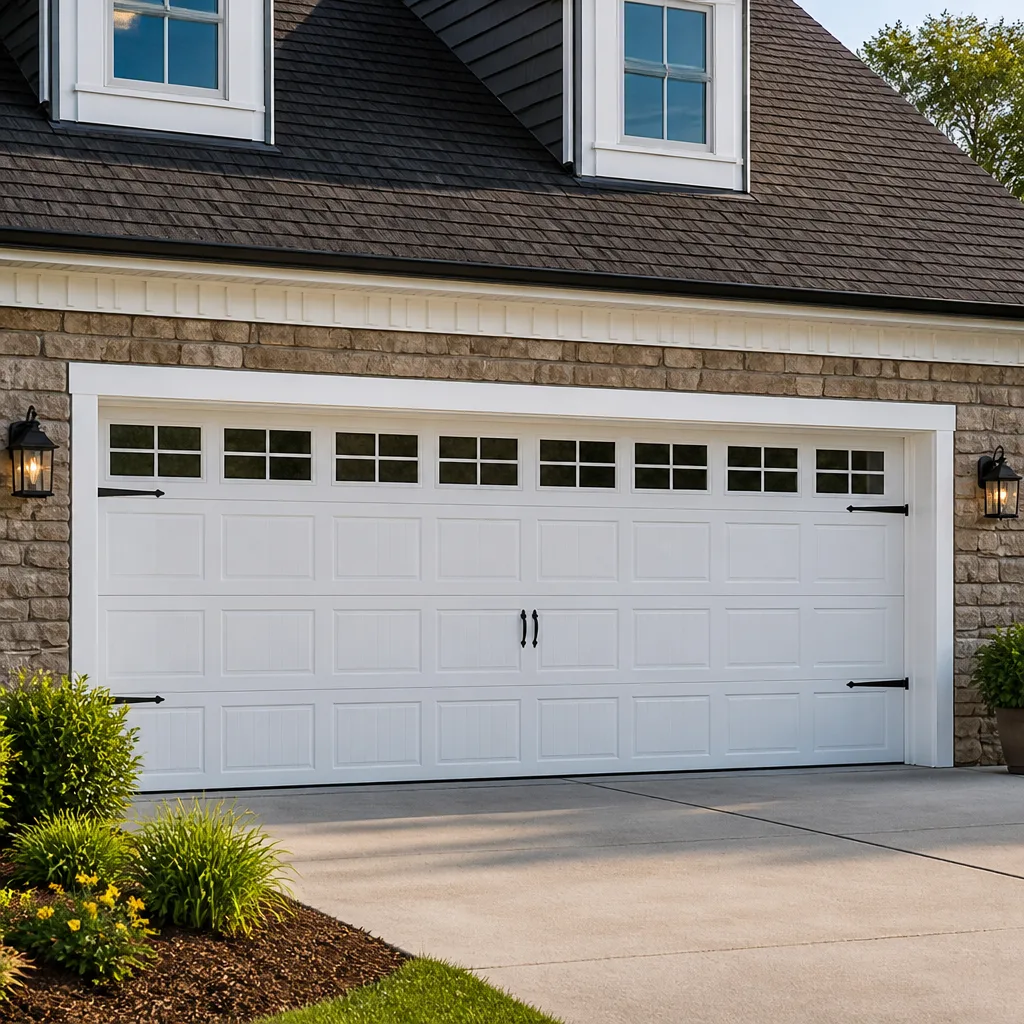
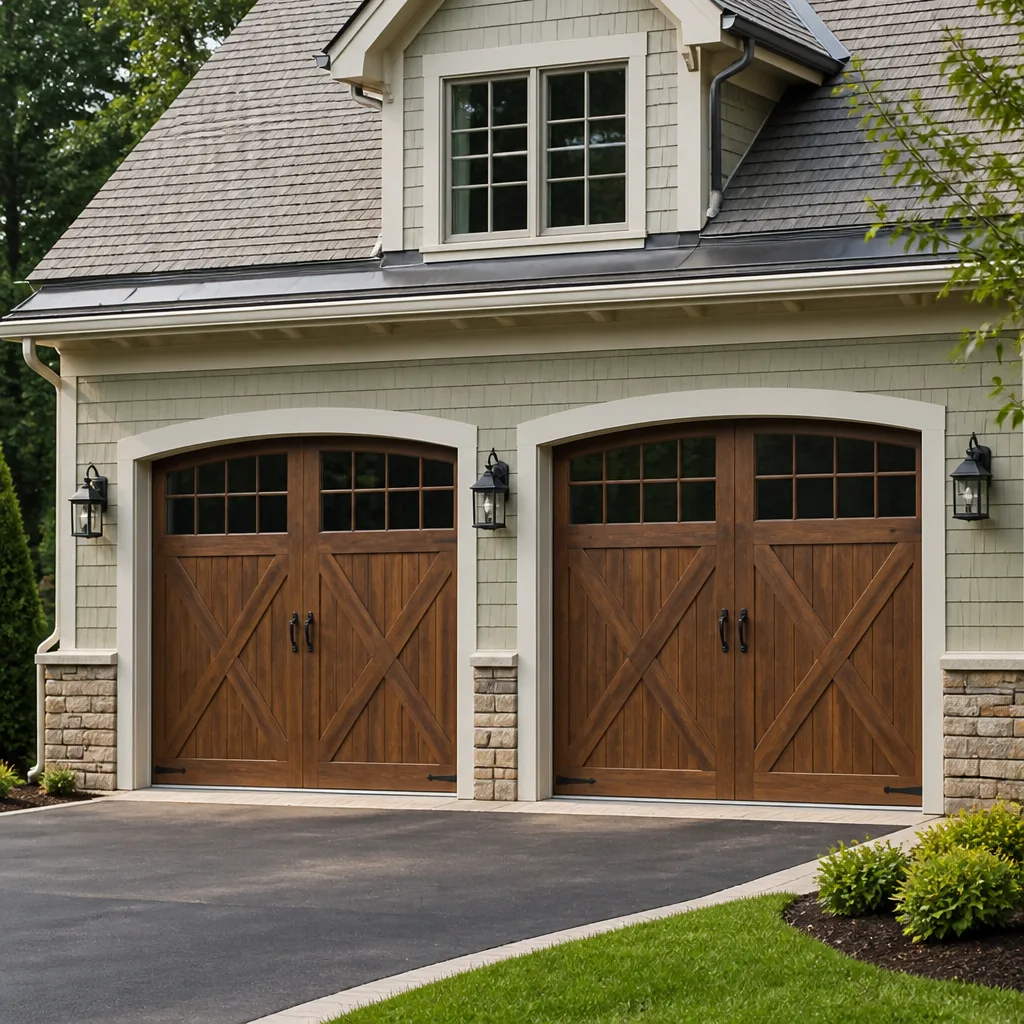 Carriage house
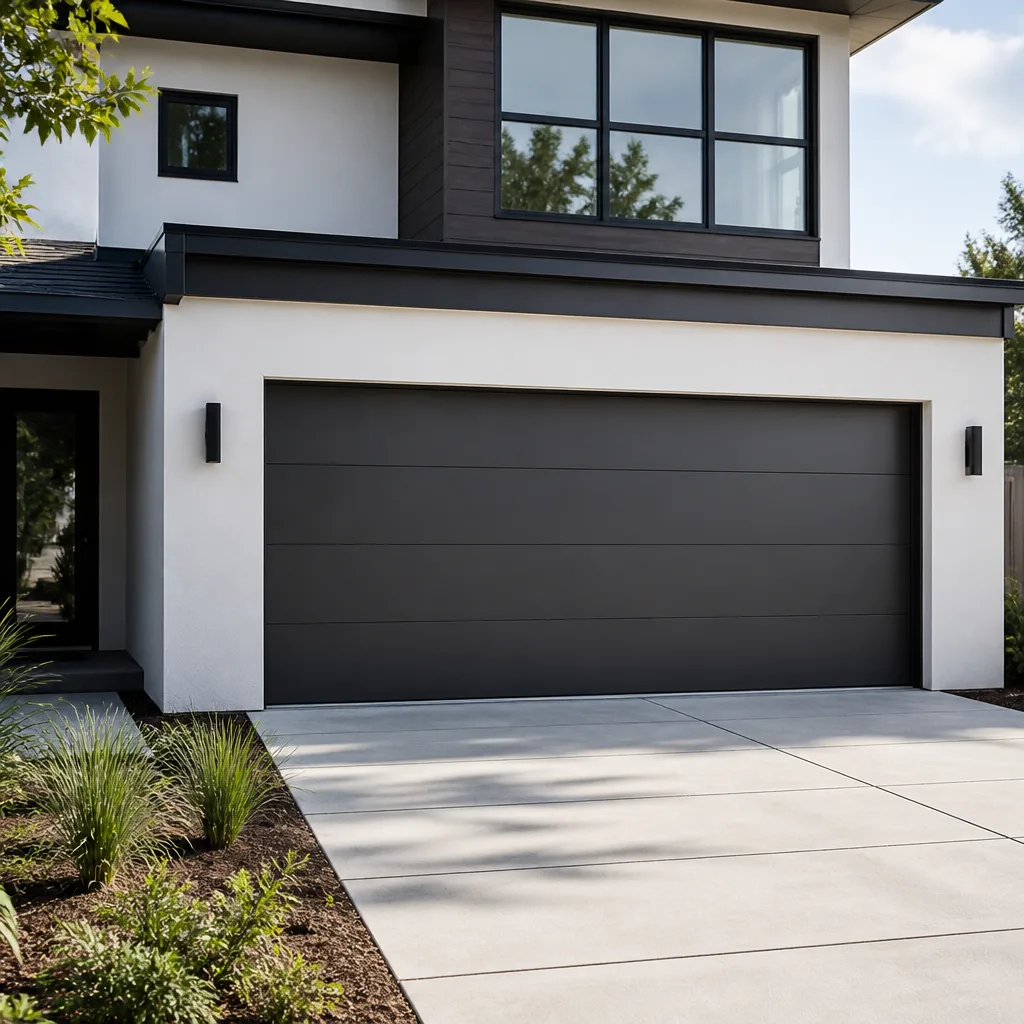 Modern flush
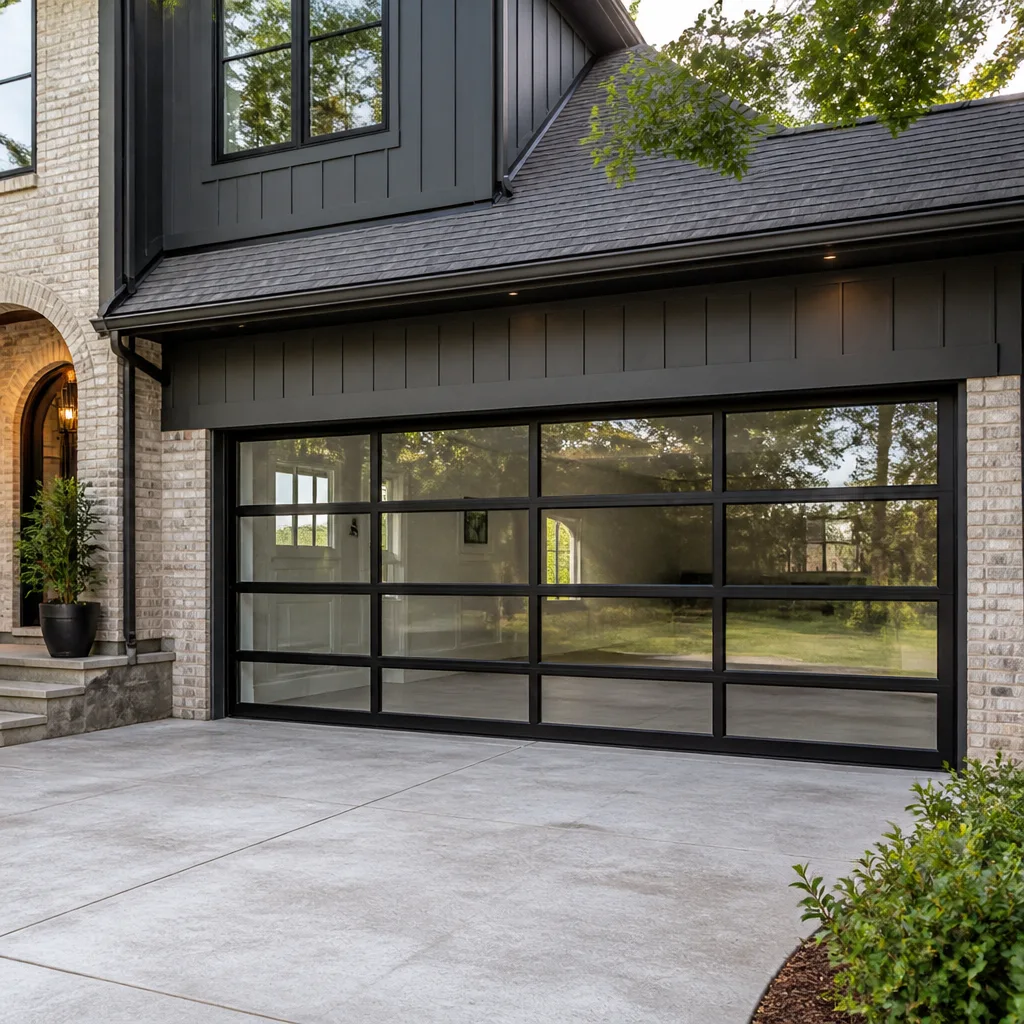 Full-view glass
 LiftMaster openers
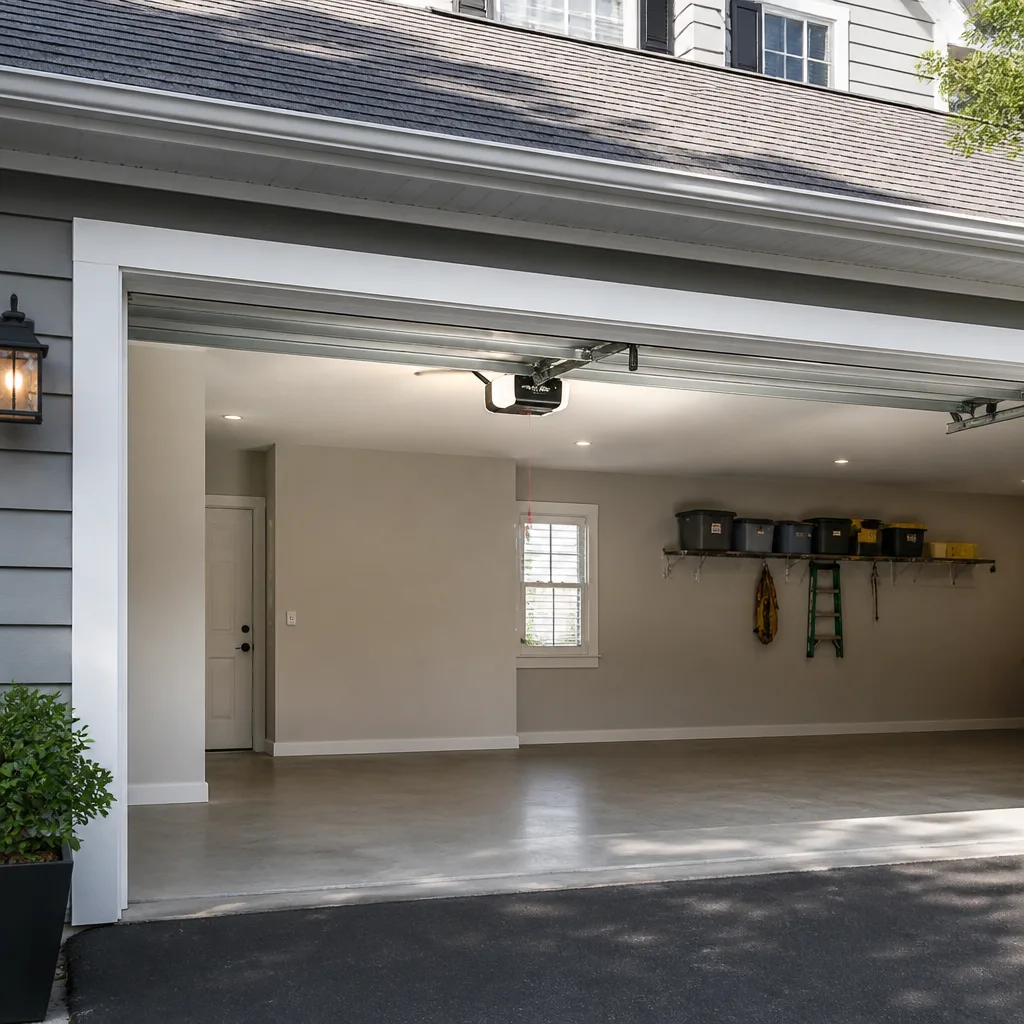 Chamberlain openers
Full 25-point door and opener safety check with every visit - springs, cables, rollers, tracks, and your LiftMaster or Chamberlain opener included
You get a price before we start. It does not change when the pro arrives.
Get your free estimateGarage Door Warning Signs: An Albany Homeowner’s Reference Guide
A grinding noise from your opener and a sagging cable are both “warning signs” – but one is often a cheap gear or roller fix, and the other is a door that can come down on a car or a person. Lumping them into one list isn’t helpful. It’s noise. In our experience, the useful question isn’t “what’s wrong?” It’s “how urgent is it?” This guide ranks the signs Albany homeowners actually see into three tiers: monitor, schedule service, and stop using the door today. You’ll also learn what Albany’s cold, wet winters do to doors here, and how to inspect your system safely from the ground.
Quick Answer
Garage door warning signs fall into three urgency tiers. Cosmetic issues like a scuffed bottom panel or a slightly noisy roller can be monitored for a while. Worn rollers, slow opener travel, and a door that reverses unexpectedly mean you should schedule service that week. A broken spring, a visibly slack or frayed cable, and a door that hangs crooked or won’t stay up mean stop using the door immediately and call a professional. In Albany, NY, the biggest hidden risk is rust creeping along the bottom section of a steel door after repeated freeze-thaw and road-salt winters.
Styles & brands we work with
- Raised-panel steel
- Carriage house
- Modern flush
- Full-view glass
- LiftMaster openers
- Chamberlain openers
Table of Contents
- The Three-Tier Severity System for Garage Door Warning Signs
- Tier 1: Signs You Can Monitor
- Tier 2: Signs That Mean Schedule Service This Week
- Tier 3: Signs That Mean Stop Using the Door Today
- Albany Winter Signs That Resolve on Their Own (and Ones That Don’t)
- How to Inspect Cables and Springs Safely From the Ground
- Decoding Opener Behavior Changes
- The Warning Sign Albany Homeowners Ignore: Bottom-Section Rust
The Three-Tier Severity System for Garage Door Warning Signs
Garage doors are one of the only systems in your home that combine heavy moving parts, high tension, and daily use. Sorting signs by severity is the fastest way to decide whether to call today or write a note on your phone for later. Here’s how we group them:
- Tier 1 – Monitor: Aesthetic issues, mild noise, and small things that don’t affect safe operation. These rarely get worse quickly and can be addressed on your schedule.
- Tier 2 – Schedule Service: Functional problems that will worsen and eventually affect other parts. Not a same-day emergency, but not something to sit on for months.
- Tier 3 – Stop Using Immediately: Anything involving spring tension, cable condition, or structural failure. Keep the door closed, keep cars out from under it, and call a trained professional.
The key concept: nothing in Tier 2 turns into Tier 3 on its own schedule. A worn roller is inconvenient. A snapping torsion spring is dangerous. Sorting your warning signs into these buckets before you pick up the phone keeps you from overreacting to a cosmetic issue and underreacting to a real one.
Homeowners in Albany deal with a real seasonal swing: cold, damp winters and hot summers. That cycle puts more stress on springs, cables, and steel panels than a steady climate does. Mechanical parts wear faster when they expand and contract, and the door panels go through it too. That’s why a yearly look at your system from the ground is worth ten minutes.
Tier 1: Signs You Can Monitor
These are the warning signs that don’t need an urgent call. They’re worth noting, but they don’t affect safety or reliability yet. Watching them lets you bundle a few small fixes into one service visit instead of paying for two trips. Here’s what we’d put in Tier 1:
- Squeaky or creaky panels: A light squeak from the hinges or rollers is usually lubrication or a worn hinge pin. It’s annoying, not dangerous.
- Minor scuffs and light dents on the door face: Cosmetic damage. It won’t stop the door from working, though deep dents on the bottom section are worth watching for rust.
- A slightly wobbly door handle or decorative hardware: Loose hardware is easy to fix and posing no operational risk.
- A single worn roller or two: Small grinding or chirping from one side can come from a worn roller. Schedule it in, but it’s not an emergency.
- Weatherstripping that’s starting to flatten: Small drafts or light gaps around the perimeter. In Albany, this can add a chill in winter, but it’s not a safety issue.
- Faint rattling from a loose bolt: If you can see the bolt and it’s accessible from the ground, it’s minor. If it’s on the track bracket, have it checked.
Watch-and-wait has limits. If a squeak becomes a consistent grinding that changes with the door’s position, or if the door starts moving unevenly, it’s a Tier 2 sign and it’s time to schedule a visit. We’ve seen enough doors in Albany to know that the small stuff rarely stays small for long during a cold snap.
Tier 2: Signs That Mean Schedule Service This Week
These signs mean something is actively wearing out. They won’t hurt anyone today, but they’ll get worse and can turn into Tier 3 problems – and they’re the kind of thing that’s often cheaper to fix before a part fails completely. Schedule a service visit in the next few days.
- Grinding noise from the opener at start-up: Often a dry worm gear or a worn gear inside the housing. On common openers like LiftMaster and Chamberlain, this kind of wear is well-documented and doesn’t fix itself.
- Door that travels slowly or unevenly: Could be a worn spring losing tension or a roller binding. Not sharp enough to stop using, but not something to ignore.
- Door reverses unexpectedly when closing: Usually a misaligned safety sensor or a logic board issue. A door that reverses can still lead to frustration or, in rare cases, damage to the door itself.
- Opener that runs but the door barely moves: Often a stripped gear or a broken disconnect cord. The door is heavy; the opener is likely working harder than it should, and the strain can shorten its life.
- Visible bowing in a single section: A mildly bowed panel can usually be repaired. Letting it continue to bow risks catching on the jamb or breaking a hinge.
- A remote that works only when you’re close: Usually a battery, but sometimes a worn receiver or wiring inside the opener. Worth checking before you assume the opener needs replacing.
The weather here makes Tier 2 signs worse. Cold temperatures stiffen lubricants and thicken grease, so a door that was quiet in August starts grinding in January. That’s normal, but it’s a signal that a service visit is due. A technician can adjust the opener force settings, relubricate safely, and check the spring tension before it becomes a problem.
When you call, a technician can usually tell you in a few questions whether it’s a simple fix or a bigger job. If you’re not sure what you’re hearing, we can help you narrow it down before anyone comes out.
Tier 3: Signs That Mean Stop Using the Door Today
These are the warning signs that involve the spring, cable, or track. They carry real injury risk and should stop you from using the door. This isn’t a “wait and see” category. If you see any of these, keep the door closed, keep people and cars clear of it, and call a trained professional.
- A snapped spring: You’ll typically hear a loud bang and find the door won’t lift, or feels extremely heavy. Torsion springs are under high tension. Do not attempt to remove or adjust one yourself.
- A visibly slack, kinked, or frayed cable: Cables are the second tension element in the system. A cable that’s slipped its drum or looks frayed can snap without warning. This is a stop-use situation.
- A door that hangs visibly crooked or comes off its track: Structural misalignment means the door’s weight is no longer balanced. It could fall or jam dangerously.
- A door that won’t stay up when you lift it: If the door doesn’t hold position at mid-height, the spring system is not doing its job. Keep it closed and call.
- Rollers that are falling out of the tracks: The door may still move, but the roller and track assemblies are structural. Don’t run it further.
- Loud grinding followed by a door that stops mid-travel: The opener’s internal gears may be stripped. Stop using the opener to avoid drawing the door out of alignment.
Safety note: torsion springs and cables are the most dangerous components on a garage door. They’re under high tension and can cause serious injury if you try to test, tighten, or replace them yourself. Leave spring, cable, and track work to a trained technician and never attempt to repair the system yourself. If you’re in Albany and you’re not sure which tier your door is in, it’s better to call and ask.
One more thing: a door that’s stopped mid-travel or won’t close can leave your home exposed. If your door fails on a Saturday, we’re closed Saturday, but you can call and we’ll book you for Sunday. We answer 24/7, with fast dispatch from 7am to 7pm, Sunday through Friday.
Albany Winter Signs That Resolve on Their Own (and Ones That Don’t)
Albany’s winters create garage door behavior that can look like mechanical failure but isn’t. Knowing which signs are weather-related and which are real saves you a needless service call – and catches the issues that won’t fix themselves.
Signs that usually resolve with warmer weather
- A stiff door that’s slow to open on a cold morning: Cold thickens grease and shrinks metal clearances. Once temperatures warm up, the door often moves normally again.
- Light condensation or fogging on the inside of the door: A humidity problem, generally not a mechanical issue.
- A remote that works inconsistently in freezing weather: Cold affects battery life. If it’s fine in spring, it was a battery issue.
- Frost or ice on the bottom seal: The door may stick briefly, but it should release once the ice breaks.
Signs that look weather-related but aren’t
- A door that reverses at the same spot every time: This is usually a sensor or travel-limit setting, not the cold. It will keep happening.
- Grinding that started in winter and continues into spring: A true mechanical wear problem that cold weather exposed, not caused.
- A slight bow in a panel that was straight last fall: Structural fatigue or impact damage, not temperature alone. It needs a look.
- Water staining on the bottom section that comes back every year: A drainage and rust issue that progresses each season. It won’t fix itself.
The simplest test: if a symptom disappears on the next warm day, it was weather. If it comes back every cold snap, it’s mechanical. In our experience, Albany winters are honest that way. They expose weak parts and leave them exposed.
How to Inspect Cables and Springs Safely From the Ground
You can learn a lot about your garage door’s condition without ever touching the spring or cable. The safest inspection is a visual one from the ground, standing a few feet back. You’re looking for anything that looks stretched, slack, frayed, rusted, or out of place. Never reach up into the mechanism or try to test the tension by hand.
Step-by-step visual inspection
- Stand back and look at the door as a whole. Is it level across the bottom? A door should look perfectly horizontal when closed. A slight tilt to one side is a Tier 3 sign.
- Look at the tracks on both sides. They should be straight and parallel. Any visible bend, dent, or separation from the wall is worth a call.
- Find the springs – torsion or extension – and look, don’t touch. Torsion springs run horizontally above the door on a shaft. Extension springs run along the tracks on either side. Look for gaps, sagging, or rust.
- Inspect the cables. Cables are wound around drums at the top corners and run down the tracks. Look for fraying, kinks, or a cable that’s slipped off its drum.
- Check the rollers from a distance. Rollers that look cracked, chipped, or out of their tracks deserve a closer look by a technician.
- Test the safety reverse function. Place a small object (a rolled-up towel works) in the door’s path and press the remote to close. The door should reverse when it contacts the object. If it doesn’t, the sensors or force settings need attention.
What “wrong” looks like: a torsion spring with a visible gap or broken end, a cable with any broken wire strands visible, a track with a visible kink, or a door that hangs unevenly when closed. Each of these is a reason to stop using the door and call. What “right” looks like: springs with a slight, even tension curve, cables that sit flush in their drums, tracks that look straight from a distance, and a door that closes level.
If you see a slack cable, a bent track, or a broken spring, stop using the door. A technician can get out the same day in many cases.
Decoding Opener Behavior Changes
Your opener tells you what’s wrong with it if you know what to listen for. Here’s how we translate the most common complaints, ordered by what they usually mean and how urgent they are.
Slow travel or a door that seems sluggish
Most often a worn spring or a roller binding. If travel is slower on one side than the other, it’s mechanical. If the door moves uniformly but slowly, it may be a force setting or a motor that’s working hard. Urgency: Tier 2. Schedule it this week.
Opener reverses unexpectedly
The safety sensors are misaligned or the logic board is interrupting travel. On LiftMaster and Chamberlain models, the most common cause is a sensor issue. Check that both sensors are facing each other and their indicator lights are steady. If that doesn’t help, call. Urgency: Tier 2, sooner if it’s happening every time.
Grinding at cold start
On Genie and similar chain-drive or screw-drive openers, cold weather thickens the grease and can make the drive train noisy. If the noise goes away once the door warms up, it’s often a lubrication issue. If the grind persists, it’s a worn gear or a stretched chain. Urgency: Tier 2.
Opener runs but the door doesn’t move
The door may be disconnected, the gear may be stripped, or a travel limit is set wrong. Check the disconnect cord (the red handle) to see if the door is in manual mode. If the opener is trying and the door isn’t moving, stop using the opener, because it can burn out the motor. Urgency: Tier 2, and if the door is stuck open or closed, treat it as urgent.
Remote works only from close range
A fresh battery is the first fix. If that doesn’t do it, the receiver inside the opener or the antenna wire may be compromised. Urgency: Tier 1 to Tier 2, depending on whether you need the door to work reliably.
If you have a LiftMaster or Chamberlain opener, these behaviors usually trace to a small number of parts. A technician can check the logic board and sensor alignment in one visit rather than guessing.
The Warning Sign Albany Homeowners Ignore: Bottom-Section Rust
If we had to name the one warning sign Albany homeowners consistently overlook, it’s rust creep along the bottom section of a steel door. It starts small, it’s easy to ignore because it’s low to the ground, and by the time it’s obvious, the door is often out of repair range. Here’s why it happens here and what to watch for.
Albany’s winters bring road salt, freeze-thaw cycles, and moisture that hangs around. That’s a rough combination for the bottom panel of a steel garage door, which sits close to the ground and collects splashes, salt, and snowmelt. Rust along the bottom hem or a lower seam looks cosmetic at first. Over time, it weakens the structural integrity of the panel, which can bow, split, or separate from the frame. Once rust reaches a seam or the bottom hem, painting over it doesn’t solve it.
What to look for, from a standing position:
- Orange or brown spots along the bottom edge of the door
- White or flaky residue near the weatherstripping (a sign of oxidized metal)
- Small bubbles in the paint along the bottom section (rust pushing through from below)
- Any soft spot or crumbling when you push gently on the bottom hem with a gloved hand
If you catch rust creep early, a technician can sometimes treat, seal, or replace a bottom panel. If the rust has reached a seam or compromised the structure, a full section or door replacement is usually the right answer. Waiting through one more Albany winter often moves you from “repair” to “replace.”
We work on steel doors from Clopay, Amarr, Wayne Dalton, and Raynor, and we can tell you whether a bottom-section repair makes sense or whether replacement is the better long-term call. Call (866) 942-9116 for a free estimate. We answer 24/7. Fast dispatch from 7am to 7pm, Sunday through Friday.
Common Mistakes to Avoid
- Lubricating a torsion spring or cable. Lubricant on the spring or cable can attract grit and mask a failing part. Those components need inspection by a technician, not a spray can.
- Testing tension by pulling on the spring by hand. Torsion springs are under high tension and can snap. Never test them yourself. Have a technician check them.
- Replacing one spring on a matched pair. When one spring of a matched pair breaks, the other usually isn’t far behind. Replace both together for even tension.
- Ignoring a door that reverses unexpectedly. A door that reverses is trying to tell you something. Misaligned sensors or a force setting issue can get worse and strain the opener.
- Painting over rust on the bottom section. Paint hides rust but doesn’t stop it. Rust on the bottom hem or a seam needs treatment, not cover-up.
- Assuming a cold-weather grind is normal. Cold does stiffen parts, but a grind at every cold start is a worn gear or a rolling part that’s about to fail.
- Calling a general handyman for spring work. Springs and cables are a specialty. A garage door specialist diagnoses tension and opener issues quickly and safely.
See the difference
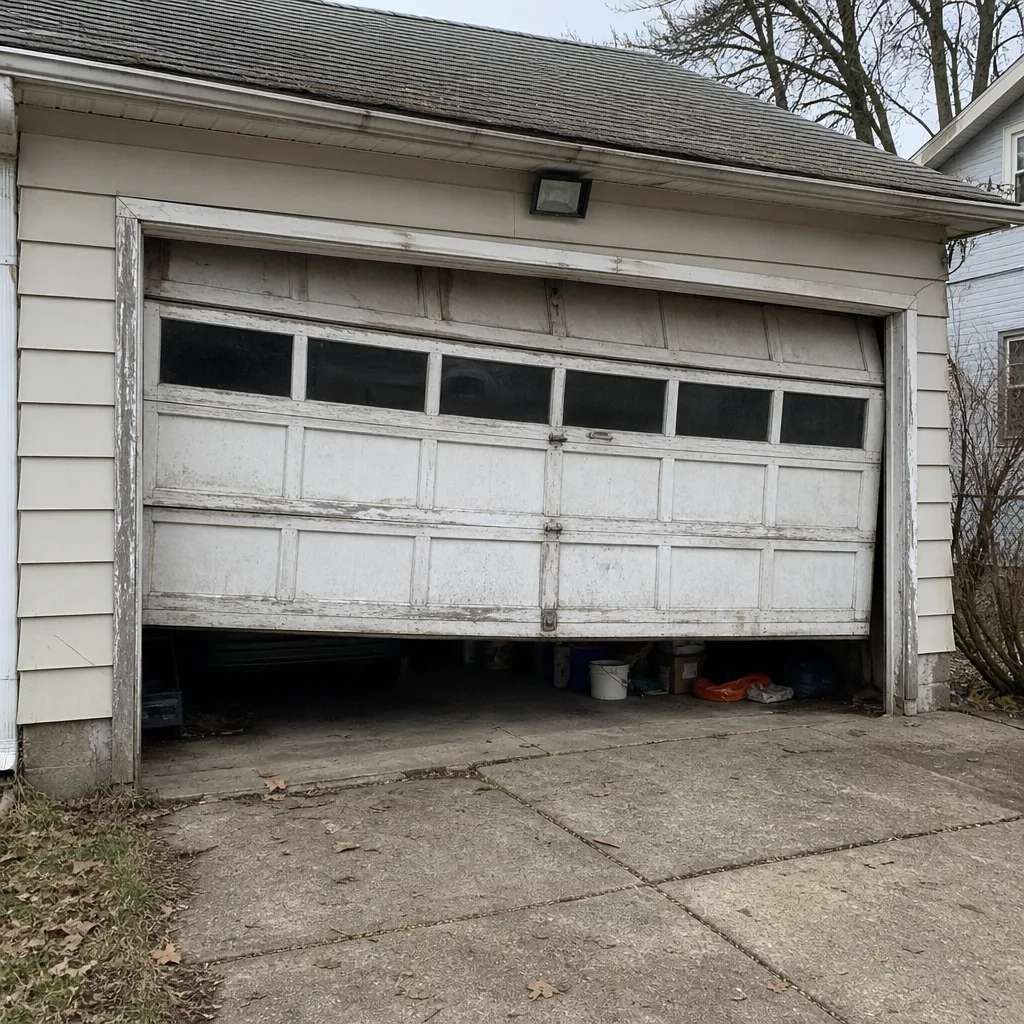 Before
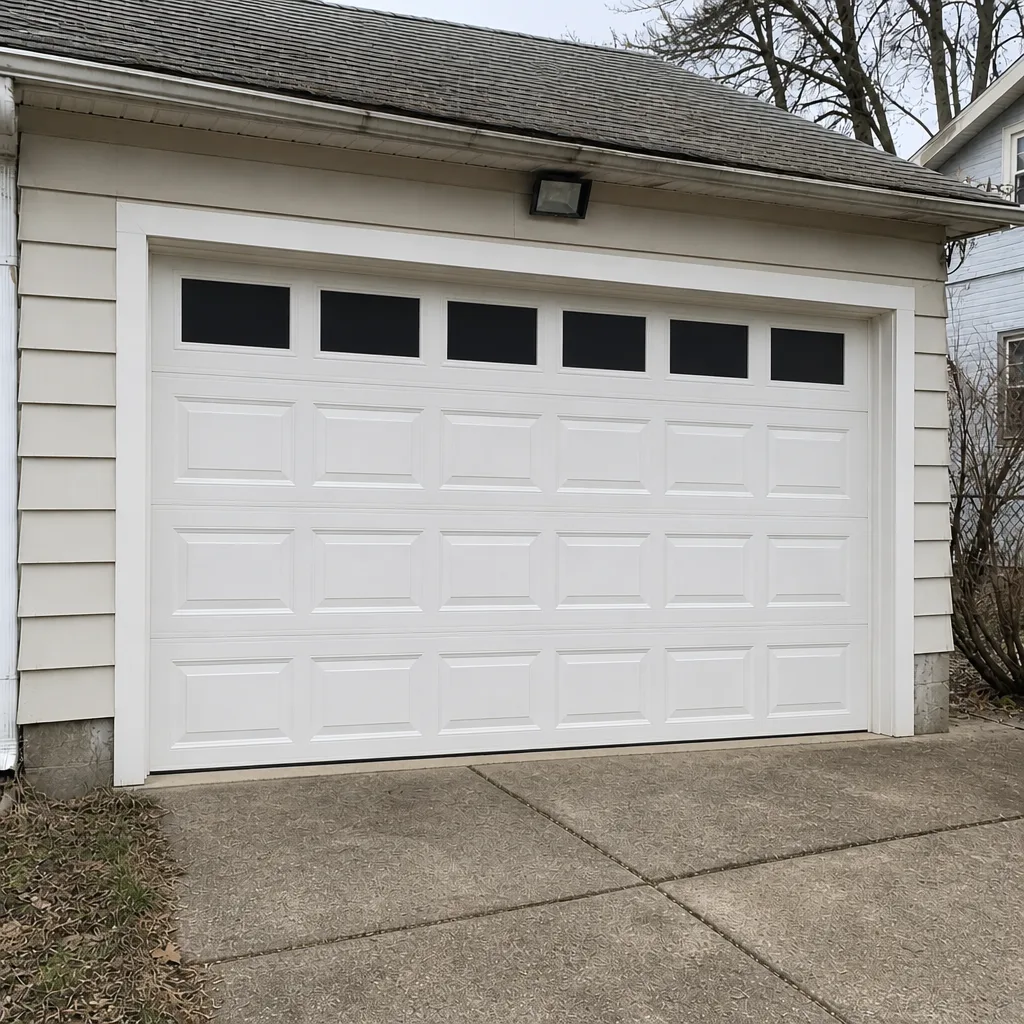 After
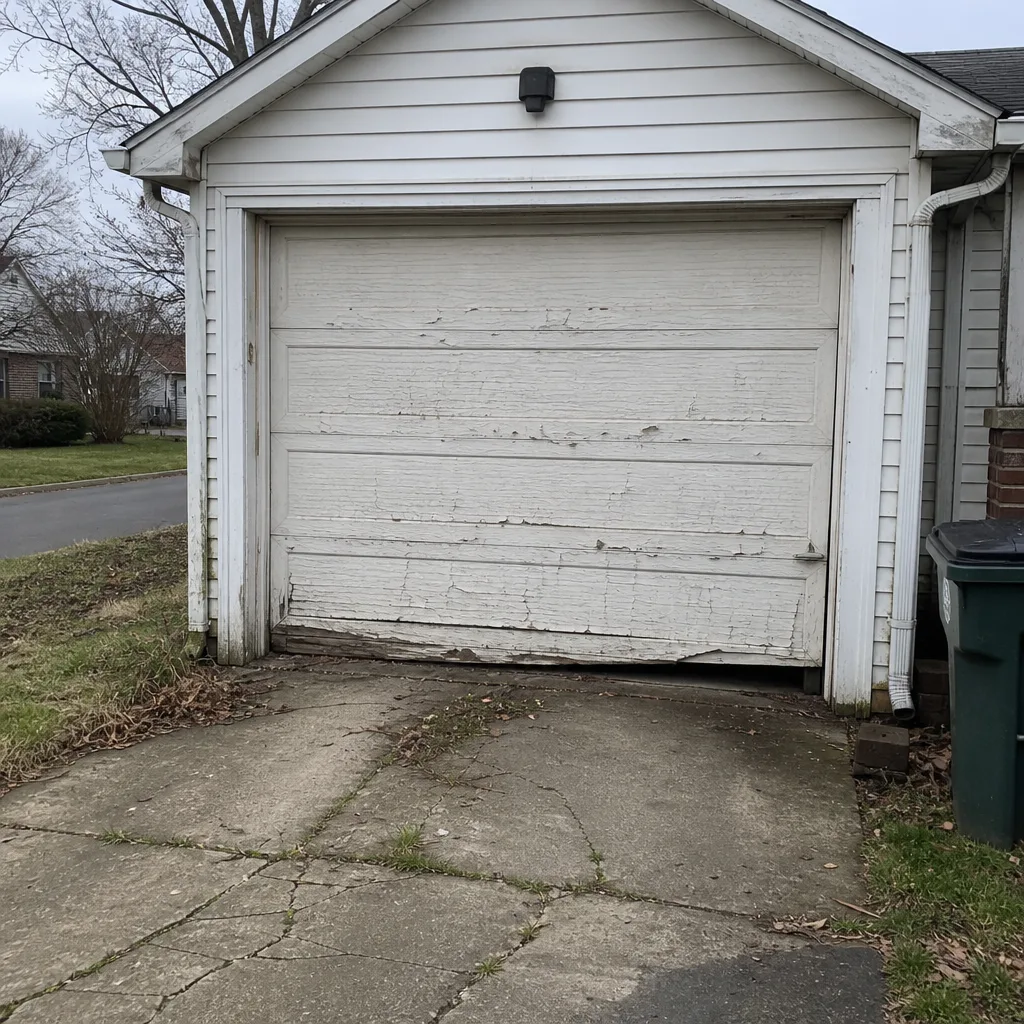 Before
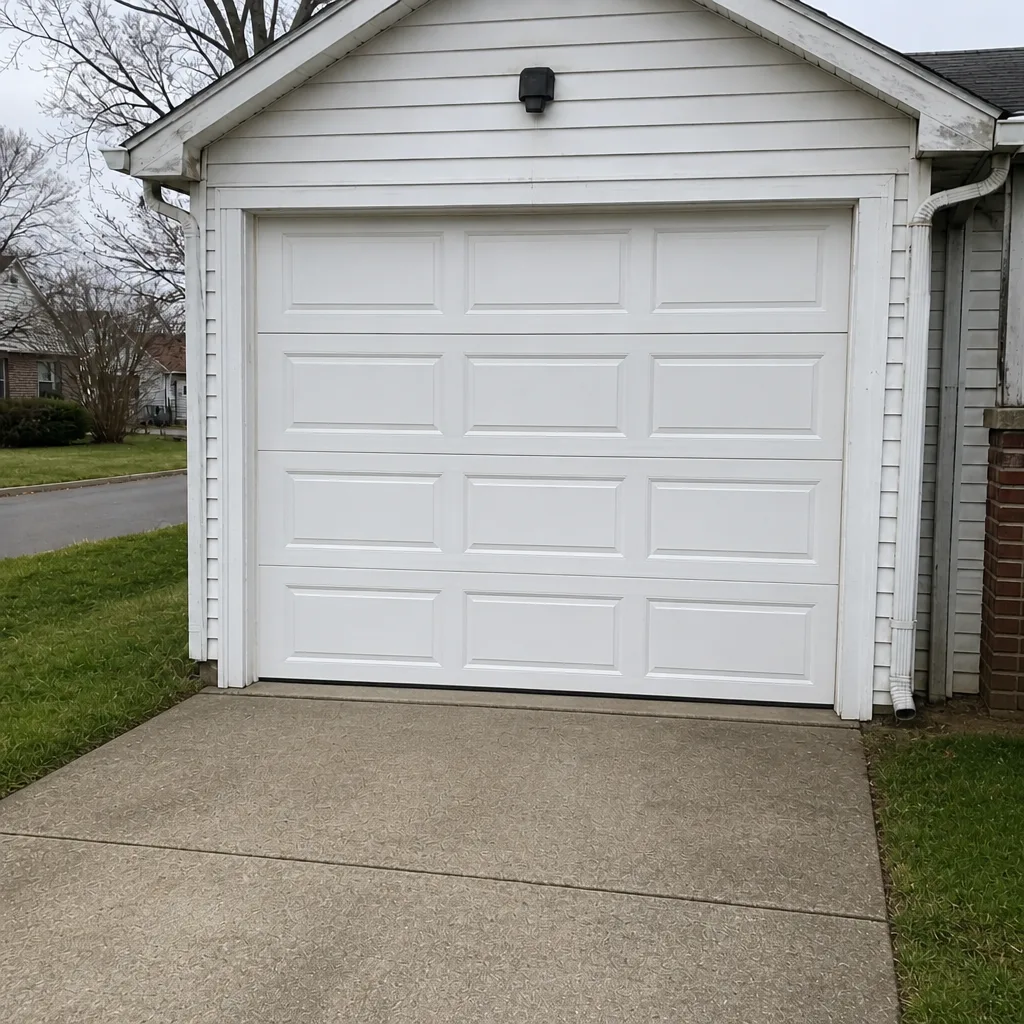 After
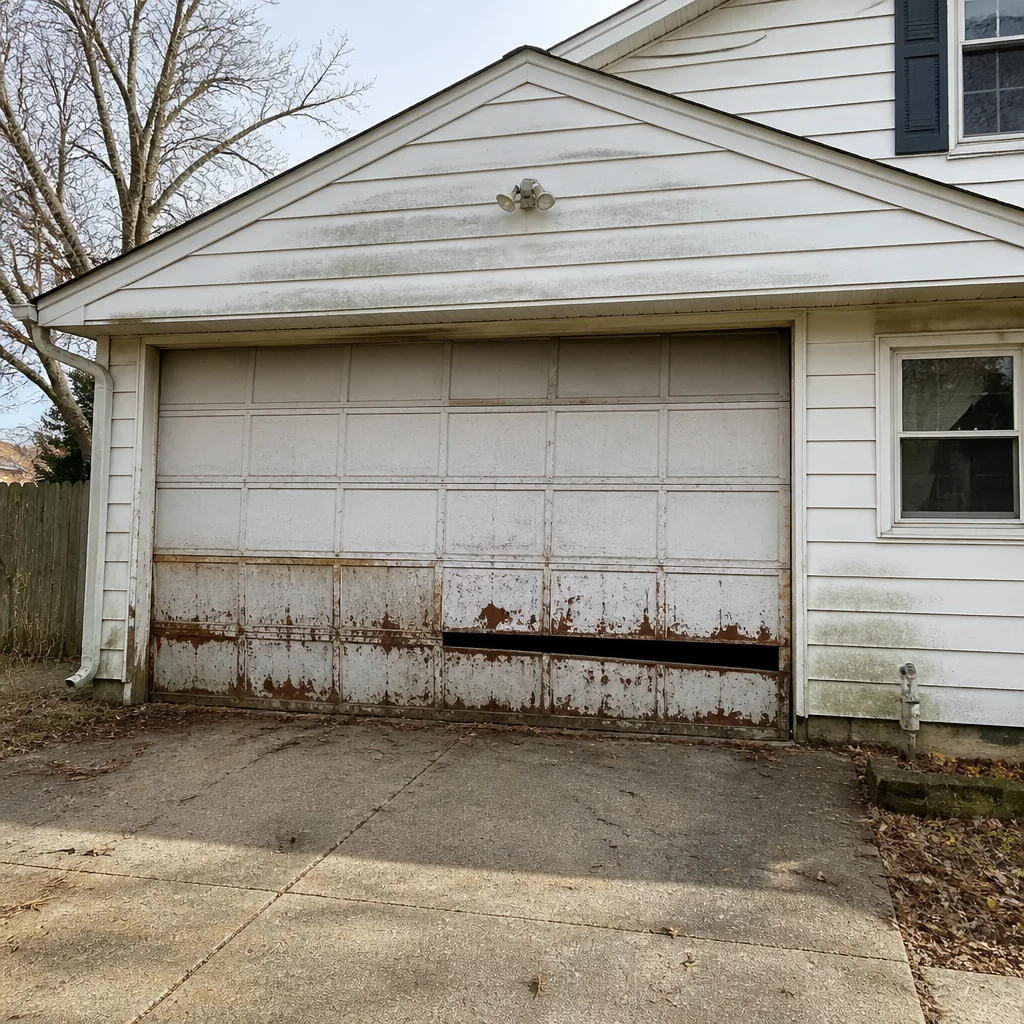 Before
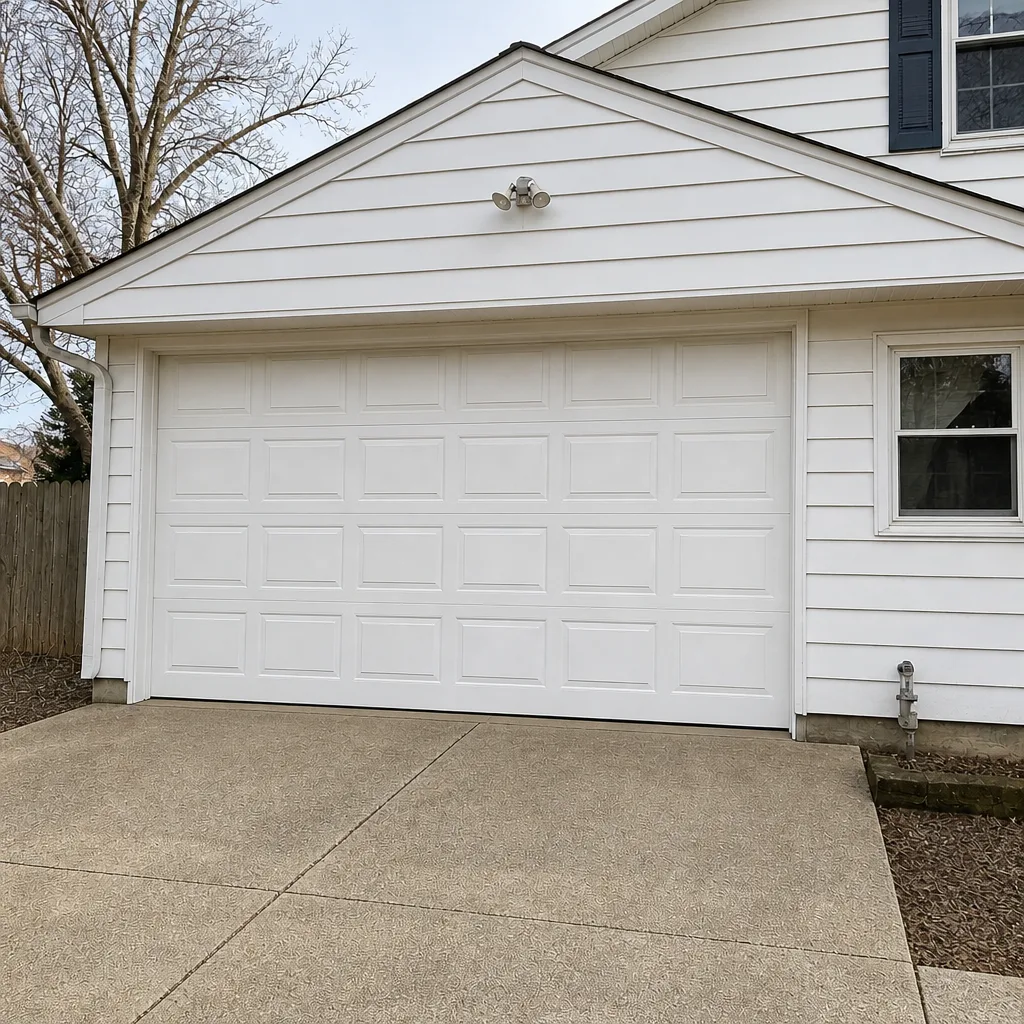 After
When to Call a Professional
Call a professional if you see or hear any Tier 3 sign: a broken spring, a slack or frayed cable, a crooked door, or a door that won’t stay up. Treat those as a same-day call. For Tier 2 signs – grinding, slow travel, unexpected reversing, or an opener that runs without moving the door – schedule a visit this week. If the door is in Tier 1, you can wait, but it’s worth a yearly checkup, especially here.
Bancroft Garage Door Repair offers free estimates in Albany and covers both the mechanical side (springs, tracks, panels, cables) and the electronic side (opener boards, remotes, sensors). We work on common brands like Raynor, LiftMaster, Chamberlain, and Genie, and we’re fluent from a five-minute phone diagnosis. If you’re not sure where your door fits on the tier list, call (866) 942-9116.
Frequently Asked Questions
A broken torsion spring usually announces itself with a loud bang and a door that becomes too heavy to lift. If you lift the door by hand and it feels like dead weight, the spring has likely failed. Stop using the door and call a technician.
Usually not an emergency, but it’s a Tier 2 sign. Grinding at start-up usually points to a dry gear or a worn drive assembly. It’s worth scheduling a visit that week. If the door stops mid-travel or the opener runs without the door moving, that’s more urgent.
A reversing door can be a symptom of a misaligned sensor or a logic board issue. It’s rarely dangerous on its own, but it can strain the opener and may point to a mechanical issue. Check the sensor alignment first.
Not necessarily. Cold weather stiffens grease and tightens clearances, so a slow first open on a cold Albany morning is often normal. If the stiffness persists into warm weather or the door starts to grind, call for a check.
Rust on the bottom section is serious when it reaches a seam or the bottom hem. If you see bubbles in the paint or a soft spot, a technician should evaluate it. Treating rust early is cheaper than replacing the door later.
From the ground, look for a door that hangs level, tracks that are straight, and cables that sit flush. Check the safety reverse function with a small object. If anything looks slack, kinked, or out of place, stop using the door and call.
The Bottom Line
Garage door warning signs are only useful if you rank them. Cosmetic squeaks belong in Tier 1. Grinding, slow opener travel, and unexpected reversing belong in Tier 2 and are worth a call that week. Broken springs, slack cables, and crooked doors belong in Tier 3 and mean stop using the door today. Here, the most overlooked sign is rust creep along the bottom of a steel door after a salt-and-freeze-thaw winter. Catch it early and it’s a repair. Ignore it for a few seasons and it’s a replacement.
If you’re in Albany and you want a second opinion on any of these signs, call (866) 942-9116 for a free estimate. We answer 24/7. Fast dispatch from 7am to 7pm, Sunday through Friday. Bancroft Garage Door Repair covers garage door repair, garage door opener repair, and new installations, and we work across the leading door and opener brands, including Raynor, LiftMaster, Chamberlain, and Genie. For broader service information, visit our Albany page. We’ll walk through each system, show you how to inspect safely from the ground, and tell you when a free estimate beats more guesswork. Garage doors are all we do.
Written by the team at Bancroft Garage Door Repair.