
Last updated November 16, 2026
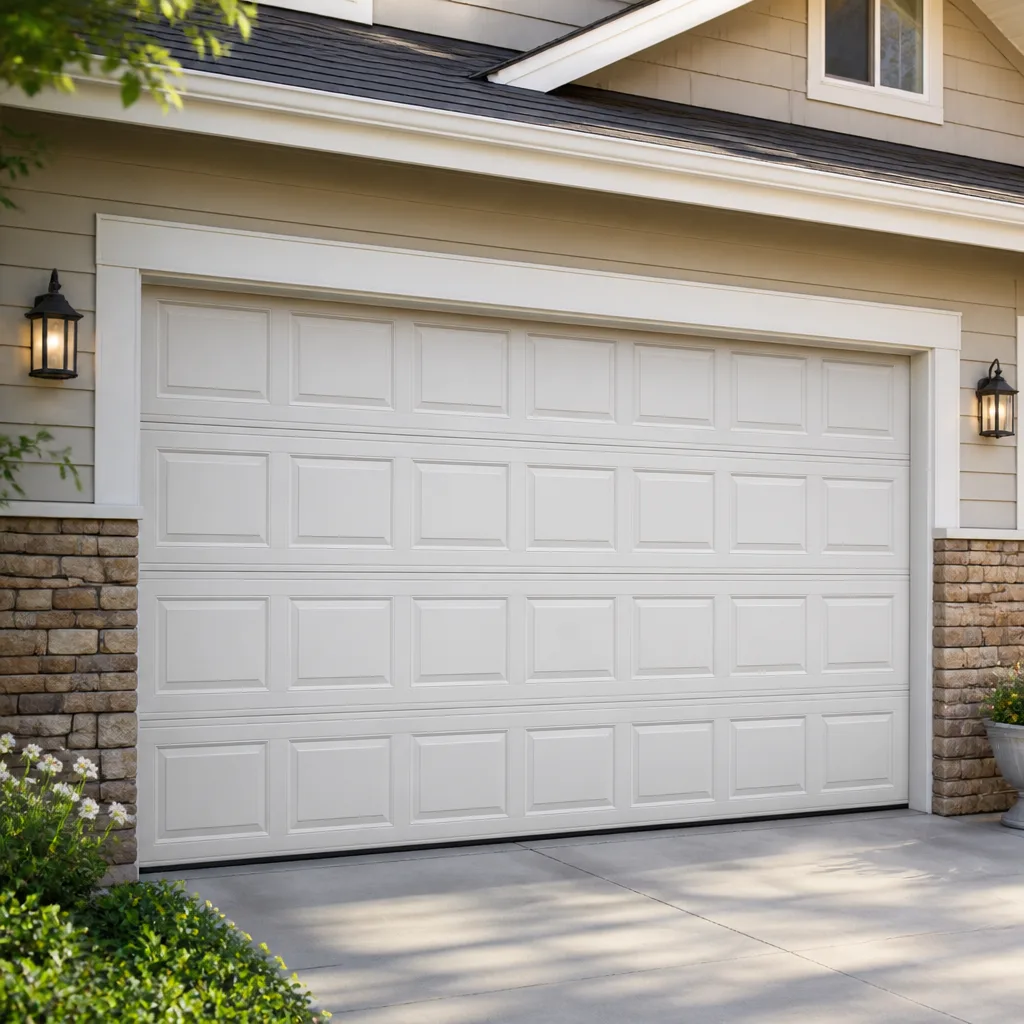 Raised-panel steel
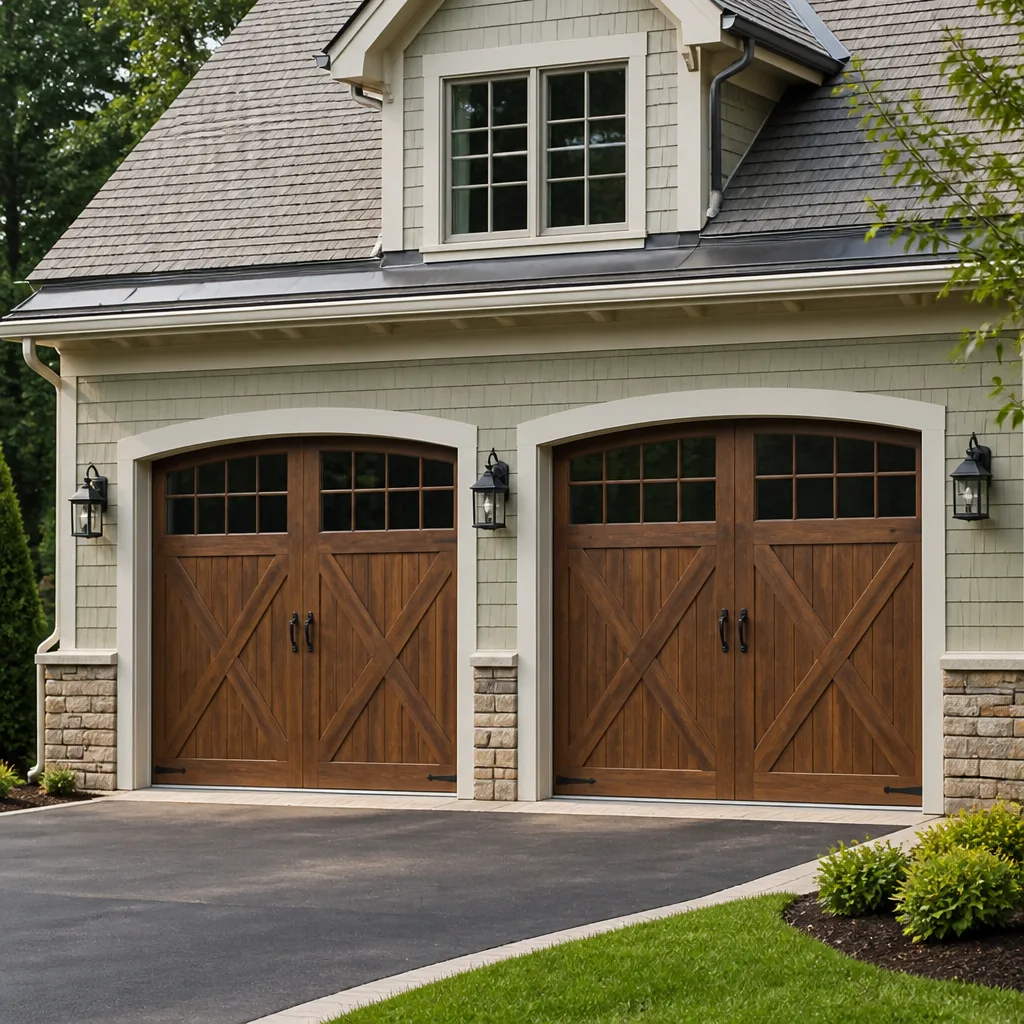 Carriage house
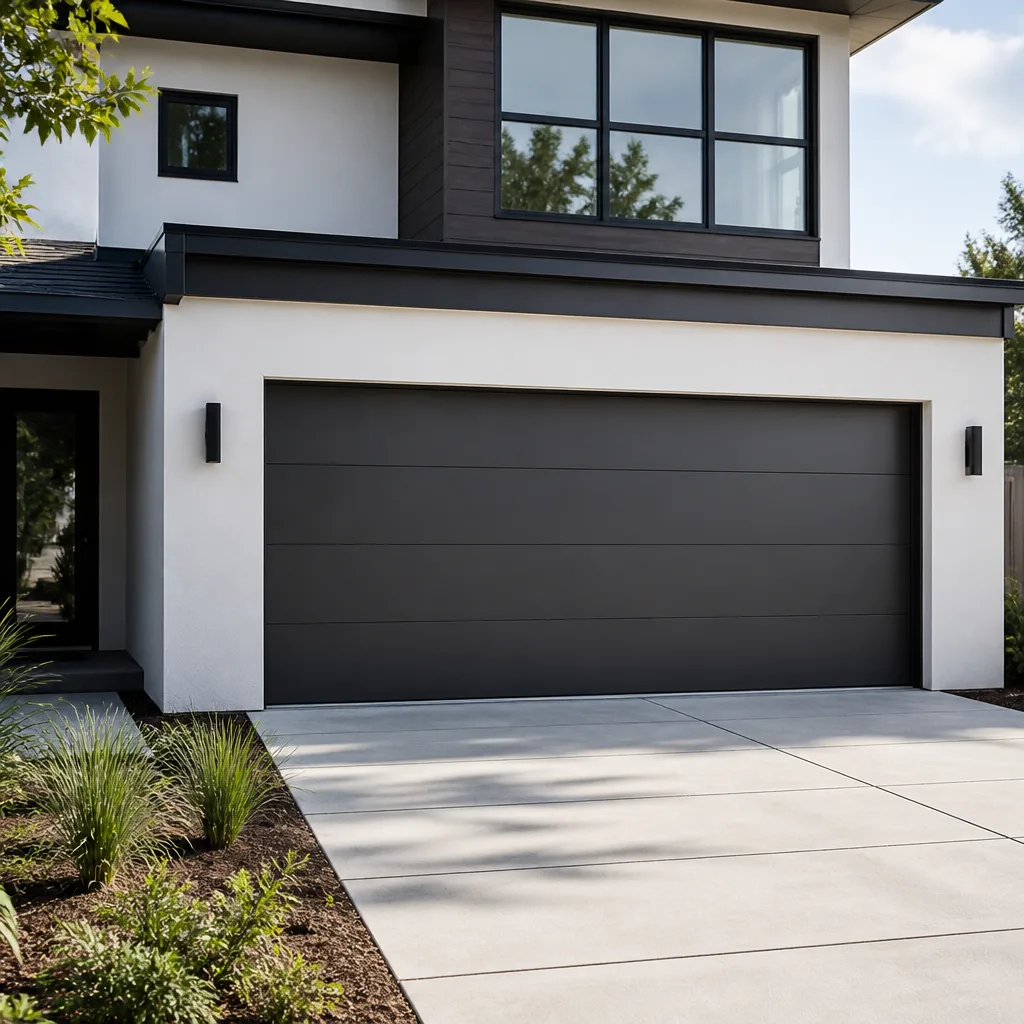 Modern flush
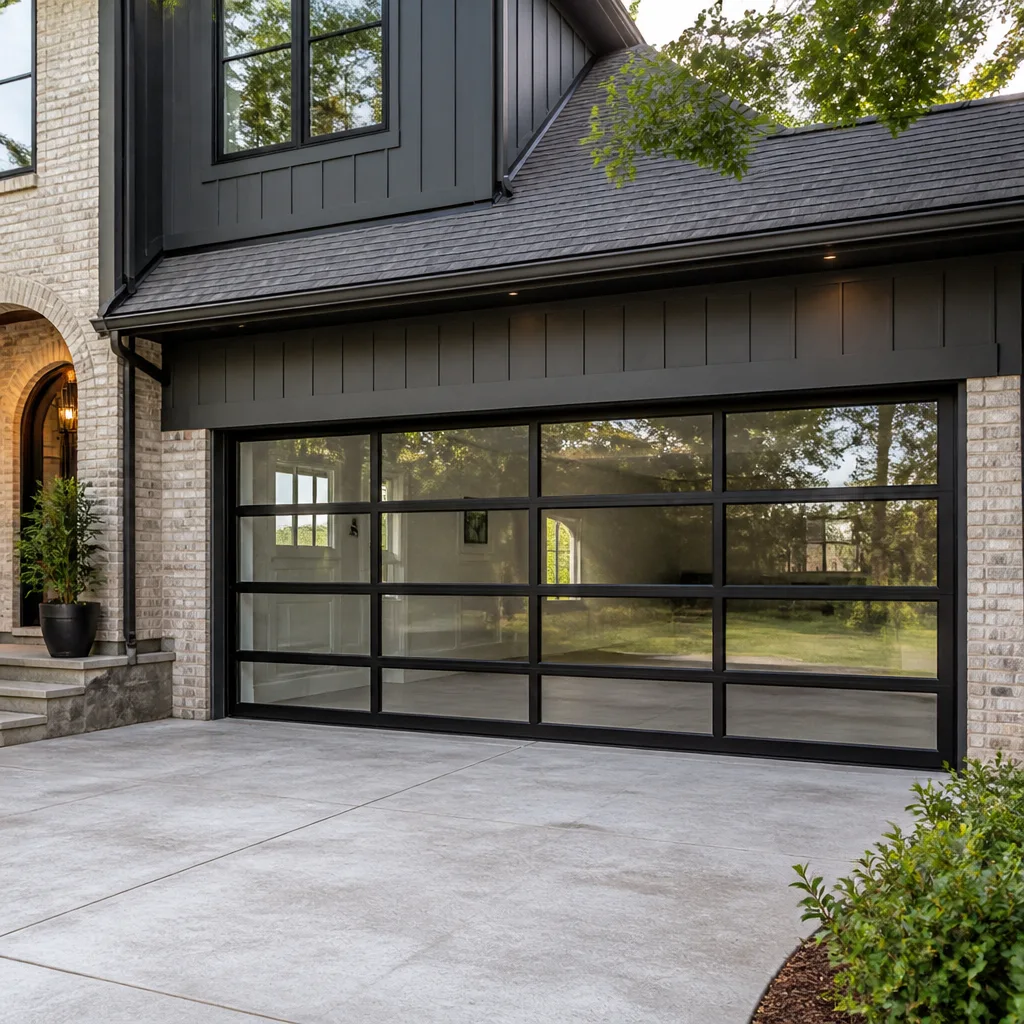 Full-view glass
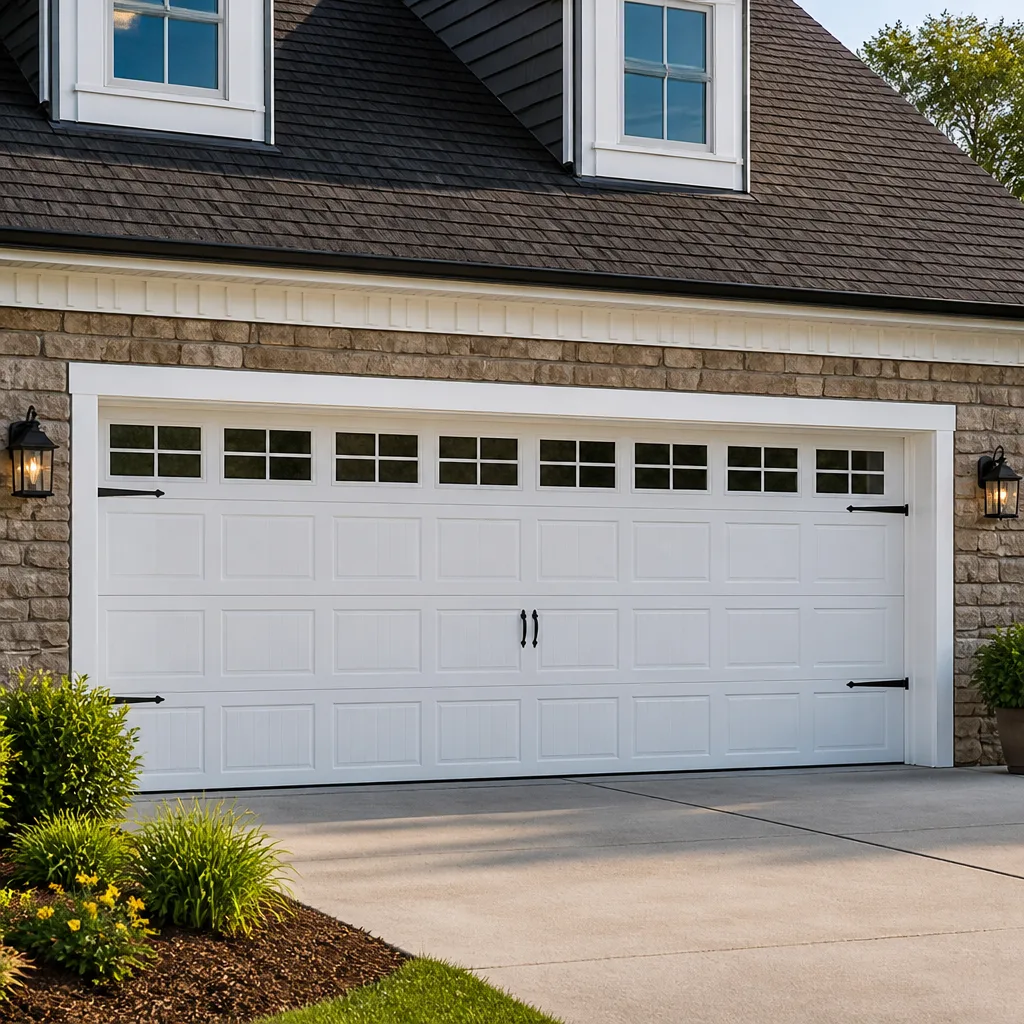 LiftMaster openers
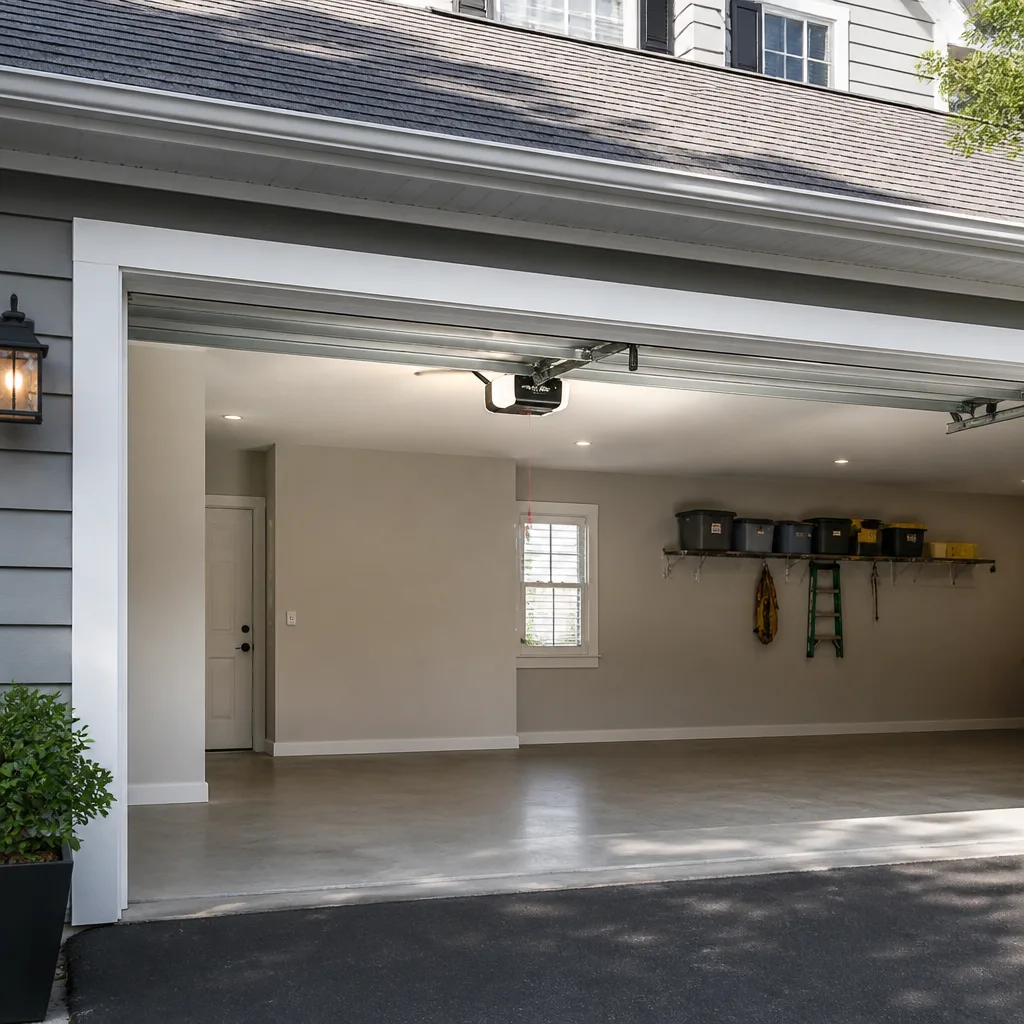 Chamberlain openers
Full 25-point door and opener safety check with every visit - springs, cables, rollers, tracks, and your LiftMaster or Chamberlain opener included
You get a price before we start. It does not change when the pro arrives.
Get your free estimateChoosing the Right Garage Door Brand: A Buyer’s Guide for Albany
Most homeowners in Albany shop for a garage door the way they shop for a car: by the name on the front. That’s backwards. The brand that matters least is the one with the biggest ad budget. What matters is whether the panels are built for a freeze-thaw climate, whether replacement sections sit on a shelf a technician can reach this week or on a factory backorder that runs into next month, and whether the warranty actually pays when road salt starts eating the bottom section. A ten-year warranty means very little if the nearest authorized service center is in Syracuse and the section you need is weeks out. This guide walks through panel construction, insulation cores, warranty language, and parts availability specifically for Albany homes, so you can choose a brand you’ll be able to live with, and service, for the next twenty years.
Quick Answer
For most Albany homes, the right garage door brand is one with a polyurethane-insulated steel door available through a local dealer who stocks replacement sections, paired with an opener from a brand local technicians can service without factory parts. Clopay, Amarr, Wayne Dalton, and Raynor all make solid doors. The deciding factors are steel gauge, insulation core, and how fast a section can be replaced when it’s damaged. In our experience, homeowners who pick on parts availability and panel construction end up happier than those who pick on advertising.
Styles & brands we work with
- Raised-panel steel
- Carriage house
- Modern flush
- Full-view glass
- LiftMaster openers
- Chamberlain openers
Table of Contents
- How Do the Major Garage Door Brands Compare for Albany Homes?
- Why Does Insulation Core Matter More in Albany Than the R-Value Label?
- What Steel Gauge Should You Look For?
- Which Brands Have Fast Parts Availability in the Albany Market?
- How Do Warranties Handle Rust and Perforation Claims?
- Which Openers Pair Cleanly With Which Doors?
- How Does Albany’s Climate Affect Door Choice?
- What Should the Buying Process Look Like?
How Do the Major Garage Door Brands Compare for Albany Homes?
The four door manufacturers most Albany homeowners end up choosing between are Clopay, Amarr, Wayne Dalton, and Raynor, with CHI occasionally showing up on local installs. All four build a decent steel door. The differences show up in steel thickness, insulation style, and how tightly the brand controls its dealer network in the Capital Region.
Clopay builds one of the widest residential lines on the market, from basic non-insulated steel to three-layer polyurethane doors. The advantage in the Albany market is that Clopay has strong dealer coverage, which usually means faster access to replacement sections and less time waiting on a factory order.
Amarr tends to offer more steel and insulation for the money in the mid-range. Dealer presence in Albany is thinner than Clopay’s, which can push a special-order section into a longer wait. Worth it if you’re comparing specs closely, less worth it if you want fast service on a damaged panel.
Wayne Dalton is known for good hardware and a solid line of insulated steel doors. Their higher-end lines hold up well, and because Wayne Dalton is one of the brands we work on regularly, we can often source common parts quickly. Less common panels or decorative faces may still need to be ordered.
Raynor builds heavier commercial-grade residential doors. On the residential side, Raynor doors are less common in Albany than Clopay or Wayne Dalton, which matters when you need a section replaced and the dealer network is smaller.
CHI is a smaller manufacturer but has a growing local presence. Doors are solid, and parts availability in the Albany area varies by model. Ask your installer directly how quickly a section can be sourced before you decide.
Why Does Insulation Core Matter More in Albany Than the R-Value Label?
Insulation keeps a garage warmer, but that’s not the reason insulation core matters so much in Albany. It matters because an insulated door has a structural job: it’s what keeps the outer skin of the door from flexing, bowing, and eventually separating from the frame. In a place that swings between a hard freeze and a thaw several times every winter, that structural job is the difference between a door that stays flat for fifteen years and one that develops a sag in the middle at year eight.
There are two common insulation types in residential doors:
- Polystyrene, sometimes called beadboard or foam-board. Lighter, cheaper, and typically glued between two steel skins.
- Polyurethane, a denser, injected foam that cures hard and bonds to the panel skins.
The R-value difference is real, but it’s the wrong reason to choose. The reason to choose polyurethane is mechanical. Polyurethane bonds the inner and outer skins into a rigid sandwich. That bond resists the flexing that happens when a metal face heats up on a sunny afternoon and then cools hard overnight, over and over from November through March. Polystyrene doesn’t bond the skins as firmly, so the panel is more likely to oil-can, bow, or pull away from the frame over time. You’re buying stiffness, not a number. That’s the argument for spending more on polyurethane in Albany, and it’s the one that doesn’t show up on most comparison charts.
What Steel Gauge Should You Look For?
Steel gauge is the single most oversimplified number in garage door sales, because lower gauge means thicker steel and thicker is better, right up until the door is so heavy that the springs wear faster. Every door has to balance steel thickness, weight, and spring life.
For an Albany home, here’s a general guide:
- 26 to 28 gauge (thinner): common on basic builder-grade and non-insulated doors. Fine for a rental or a shed, but these doors tend to dent from a thrown ball or a bike handle.
- 24 gauge: the practical floor for a long-term residential door. Good dent resistance without being heavy.
- 25 gauge on thicker three-layer doors: often paired with a steel backer that adds rigidity. Pay attention to whether the door is two-layer (front skin only) or three-layer (front skin, insulation, back skin). Three-layer adds stiffness and insulation.
- Heavier than 24 gauge for insulated doors: don’t assume better. A very heavy door needs heavier springs and larger opener capacity to balance it. Confirm the spring and opener match the door weight.
The one thing nobody puts in a spec sheet: a thicker skin doesn’t mean much if the back of the panel is exposed steel with no backer. In an unheated Albany garage, a back skin prevents condensation forming on the inside of the door and running down behind the paint. A two-layer door with no back skin is more likely to develop rust at the bottom edge where water sits. That’s a spec worth asking about before you sign.
Which Brands Have Fast Parts Availability in the Albany Market?
This is the criterion most buyers never check, and it’s the one that determines whether a damaged door is a week’s inconvenience or a month of it. A garage door is a set of matched panels. When one is dented, you can’t just buy a generic replacement panel; the section has to match the profile, color, and gauge of the originals. If that section isn’t stocked locally, you’re waiting on the factory.
In the Albany market, here’s roughly how the brands shake out on parts access:
- Clopay: the widest local dealer network of the four, which usually means faster access to sections and hardware. Most service work we see on Clopay can be turned around the same week.
- Wayne Dalton: solid local support on common models. Specialty faces, custom colors, and decorative inserts may need to come from the factory.
- Amarr: commonly stocked at builder-supply yards, but the dealer network for replacement sections is thinner. Standard sizes usually available; odd sizes less so.
- Raynor: heavier-duty doors hold up well but locally sourced residential sections can be slower to find. Plan for a longer lead time if a panel is damaged.
- CHI: variable by model. Worth confirming with the installer that common parts are available locally before you buy.
You can also check parts availability by asking the installer to confirm, in writing, where a section for your specific model would come from if it needed replacing. If the answer is a factory order, the door may still be right for you, but it’s better to know that up front. Our garage door repair service sees this question come up most often when a slow-moving brand has a bowed panel.
How Do Warranties Handle Rust and Perforation Claims?
Rust is the first thing that kills a steel garage door in Albany, not impact. Road salt kicked up from the street, splash off a wet driveway, and the general moisture of a hard winter all work on the bottom section and the bottom seals. The warranty clause that matters most is the rust-perforation provision, and it’s the clause buyers read least closely.
What to look for:
- Perforation vs. surface rust: a warranty that only covers rust that has perforated metal (rusted completely through) sounds generous, but by the time it perforates you may be years into the problem. A warranty that covers surface rust earlier is worth more.
- Who does the repair? Some warranties replace the panel, some replace the door, and some only reimburse materials. If only the material is covered, the labor to install a new section is on you. That’s often the bigger number.
- Rust at the bottom edge vs. the field of the panel: the bottom edge is the most common rust point, and it’s also the one most often excluded as “normal wear.” Read that line carefully.
- Paint finish coverage: check whether the warranty covers finish bubbling or peeling separately from perforation, and how long that coverage lasts.
- Registration and proof of purchase: nearly all warranties require registration and proof of sale. Keep the paperwork in a folder, not a drawer.
In general, a three-layer insulated door with a bonded polyurethane core holds up better against rust at the bottom edge than a two-layer door, because the back skin keeps condensation from forming behind the paint. That’s a warranty-adjacent reason to choose one door over another. If you’re already dealing with rust, our garage door opener repair techs can also advise on whether a repair or replacement is the smarter spend, since a stuck door often ends up an opener problem on a rusty one. The same question is worth asking of a technician before you commit to a full replacement. And if you’re comparing brands for a new install, it helps to do that reading before the measure, not after.
Which Openers Pair Cleanly With Which Doors?
The door and the opener have to work as one system. A door with a heavy three-layer polyurethane panel needs an opener rated for that weight and springing. An opener that’s mismatched to a heavier door is where you get premature wear on the gears, the belt, and the springs. This is where brand pairing matters.
On the opener side, the major residential brands are LiftMaster, Chamberlain, Genie, and Craftsman. LiftMaster and Chamberlain share a lot of engineering, and both use the myQ smart-access platform. So does Raynor’s opener line. A door pre-engineered for myQ integration will pair with the app and the remotes out of the box, no adapter needed. A door from a brand outside that ecosystem usually needs a bridge or a third-party adapter to link to the same app.
What that means for an Albany buyer:
- Choose the door first, then the opener. Picking the opener around the door lets you match capacity to door weight and pick the smart platform that fits your house, rather than forcing a door to fit an opener.
- Confirm the opener’s rated door weight against the door’s weight rating. A heavier insulated door needs a stronger opener and heavier springs. Don’t let a sales sheet skip this step.
- Ask whether the door is pre-wired for the opener’s safety sensors. If it isn’t, the opener tech will need to route that wiring during install.
- Check the app compatibility list before you buy. myQ, Genie, and Raynor all list compatible door and opener models. A quick look at the list tells you whether you’re in the ecosystem or outside it.
Our technicians have up to 13 years of experience on these systems, which is why we can often tell from the model number what will and won’t pair cleanly. We see this question most on LiftMaster and Chamberlain swaps, where homeowners buy a new opener for a door the old unit was already matched to.
How Does Albany’s Climate Affect Door Choice?
Albany sits in a climate that does two things to a garage door: it cycles it through dozens of freeze-thaw swings every winter, and it salts the roads around it hard enough that splash-back onto the bottom panel is basically guaranteed after every storm. Those two things drive most of the decisions in this guide.
The freeze-thaw cycle works on the seams between panels and the bottom seal. Water gets into a joint, freezes, expands, and slowly opens it up. Over a few seasons that turns into a gap where rust starts and where the door can bind. A door with a tighter panel joint and a back skin resists this better than a builder-grade door with an open back.
The salt works on the bottom edge. The bottom seal, the bottom panel edge, and the hinges are the first places to show rust. A door with a vinyl bottom seal and a properly painted cut edge will last longer than one where the paint stops at the panel face and the cut edge is bare. If you can, ask to see the bottom edge of a sample door before you buy. It’s a small thing that tells you a lot.
Where does the local context come in? Homes in neighborhoods like Delaware Avenue, Buckingham Pond, and Pine Hills often sit with a garage open to the street, so splash-back is frequent. Newer builds on the outskirts of Albany have deeper setbacks and less salt exposure, but more exposure to sun on a south-facing door, which causes the opposite problem: the paint heats and cools harder. A bonded polyurethane door handles both extremes better than a polystyrene one. Our Bancroft Garage Door Repair team sees this pattern across the city, and it’s one of the reasons we tend to steer toward three-layer doors for Albany homes.
What Should the Buying Process Look Like?
A good garage door purchase is a measured, ordered, and scheduled process, not a same-day job. Here’s the sequence a homeowner should expect:
- Measure the opening and confirm the headroom. The installer measures the width, height, headroom (the space above the door for the opener rail and spring assembly) and the side room for the track.
- Match the door to the opening and use. Standard sizes vs. custom, insulated vs. non-insulated, window vs. no window. If you use the garage as a workspace or a gym, the insulation grade goes up.
- Confirm the opener. Rated weight, drive type (belt, chain, screw), battery backup if you want the door to work in a power outage, and smart access if you want app control.
- Get a written price. The price is set per job by the written estimate, and it should be agreed before any work starts. Compare the whole number, not just the door cost.
- Order the door and section set. Panels and opener come in from the dealer or factory. This is where a local dealer network matters, because a well-stocked brand arrives faster than a factory order.
- Schedule the install. A full replacement is a measured job. It’s booked into a day, not done on the spot.
- Handle the springs safely. The spring is the most dangerous part of any garage door. The high-tension spring and cable assembly can cause serious injury if released incorrectly. Replacement of springs and cables is not a homeowner job. A trained professional should handle that work, every time.
If your existing door is repairable, ask for that option first. A bonded panel that has a single dented section may only need that section replaced. A technician can usually tell you within a few minutes of the visual inspection whether repair or replace is the smarter spend. That’s the honest guidance most homeowners want, and it’s not always the answer a sales-first company will give. The same Albany team can advise on repair vs. replacement here.
Common Mistakes to Avoid
- Choosing by advertisement, not by parts availability. Ask where a replacement section would come from before you buy. A brand that ships in a day beats a brand with a bigger name and a three-week order window.
- Comparing only the R-value number. R-value tells you about heat, not about how the panel holds up to freeze-thaw. The structural reason for polyurethane is that it bonds the skins and resists bowing.
- Buying a door that only fits one opener brand. Look at the opener compatibility list first. It’s the difference between plug-and-play and a bridge adapter.
- Skipping the paint at the cut edge. A door painted on the face but not on the bottom cut edge rusts first at the bottom. Look at the edge, not just the face.
- Not keeping warranty paperwork together. Most rust-perforation claims need registration and proof of purchase. Save them in a folder with the door model number written on it.
- Assuming heavier steel is always better. A very heavy door needs heavier springs and a stronger opener. Match the system, don’t just match the skin.
- Hiring a general handyman for spring or opener work. Springs and opener boards are not the place to improvise. Garage doors are all we do, and springs and cables are exactly the kind of work that needs a trained professional.
See the difference
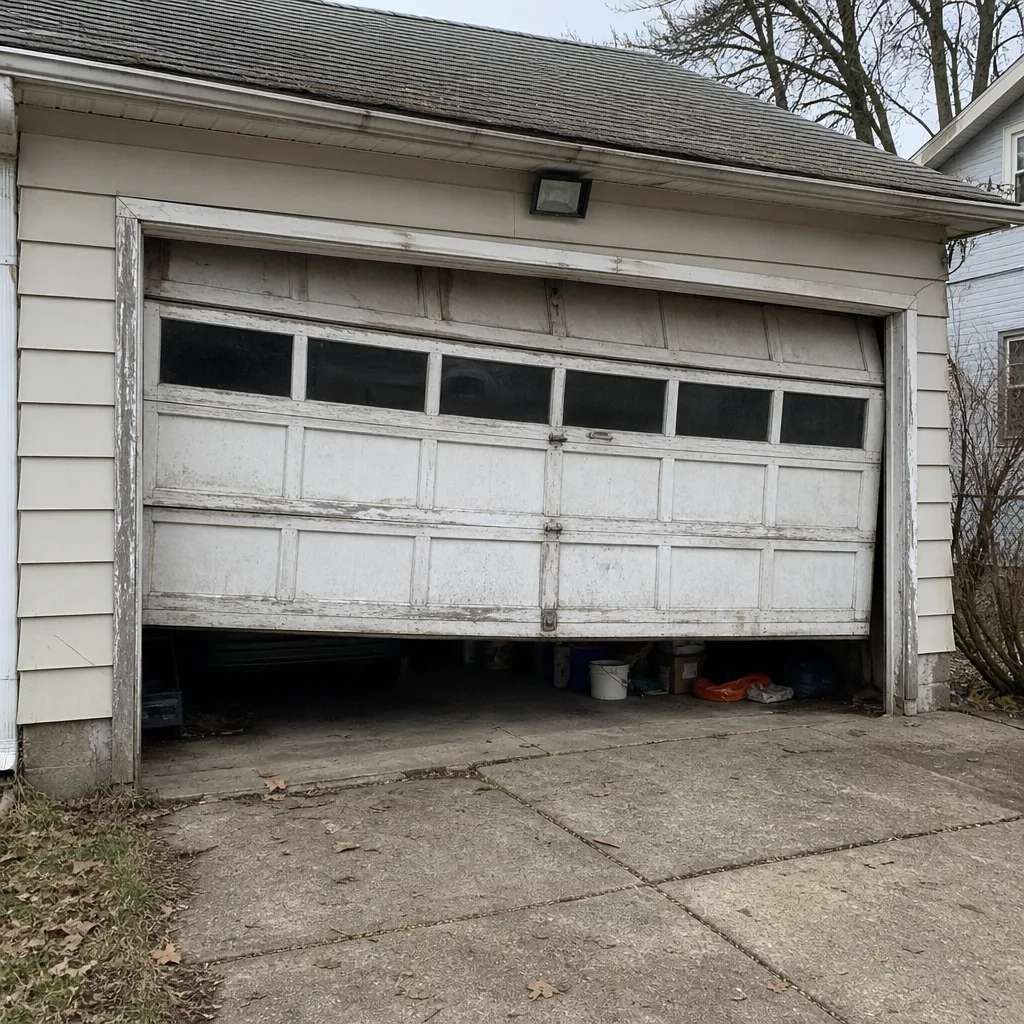 Before
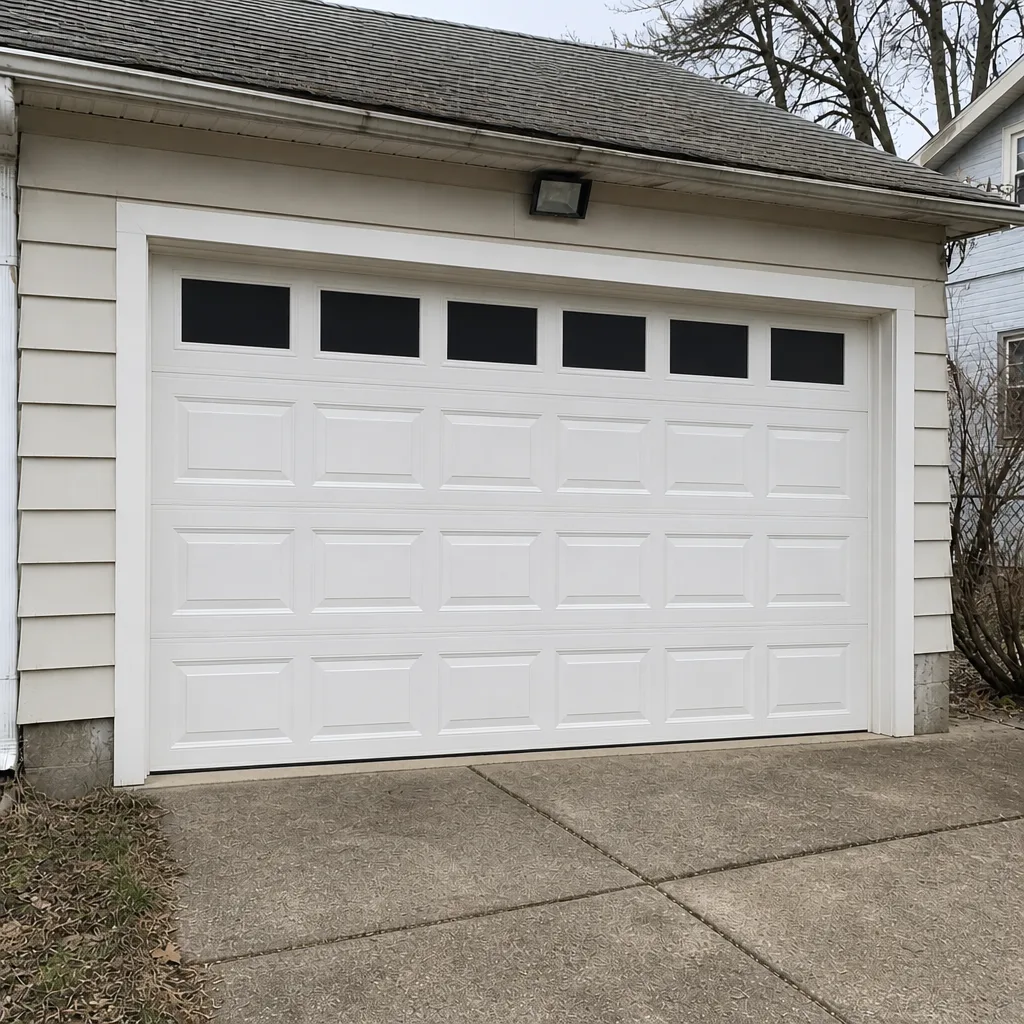 After
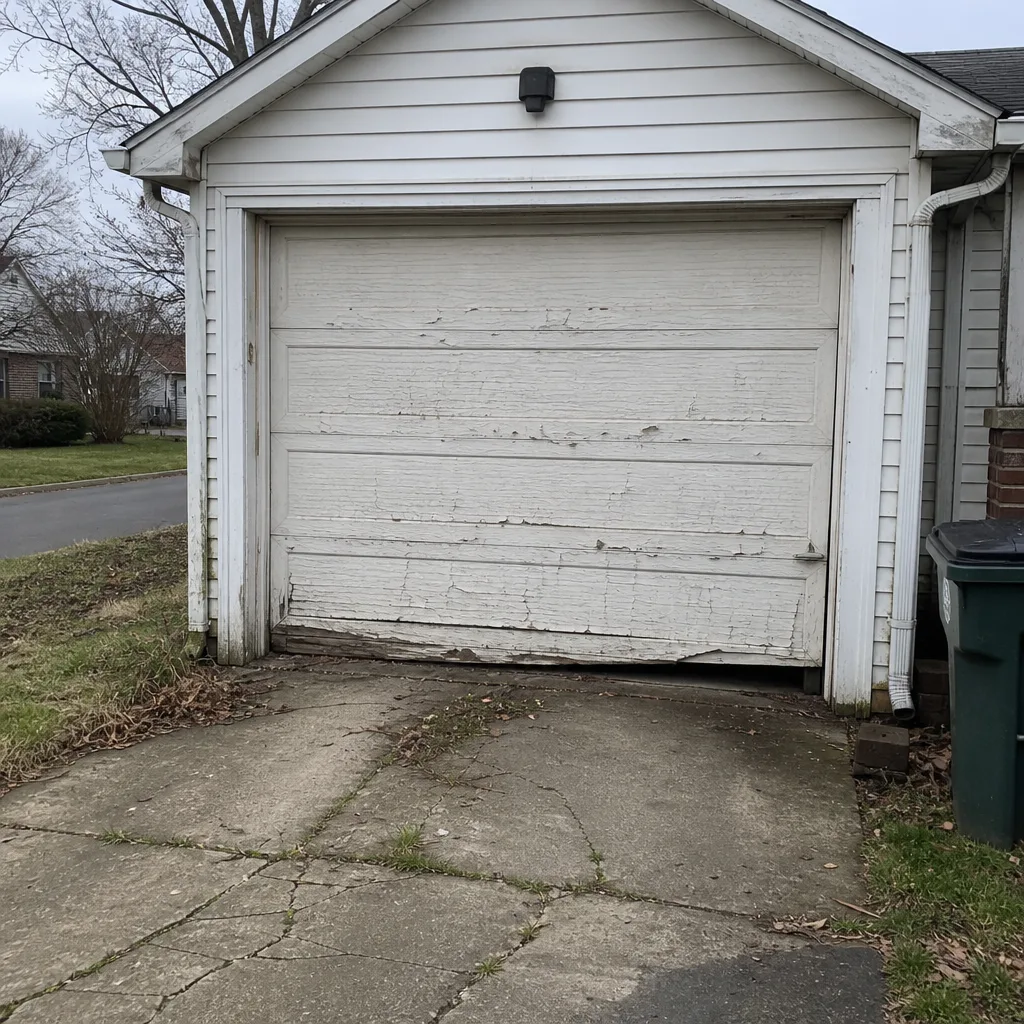 Before
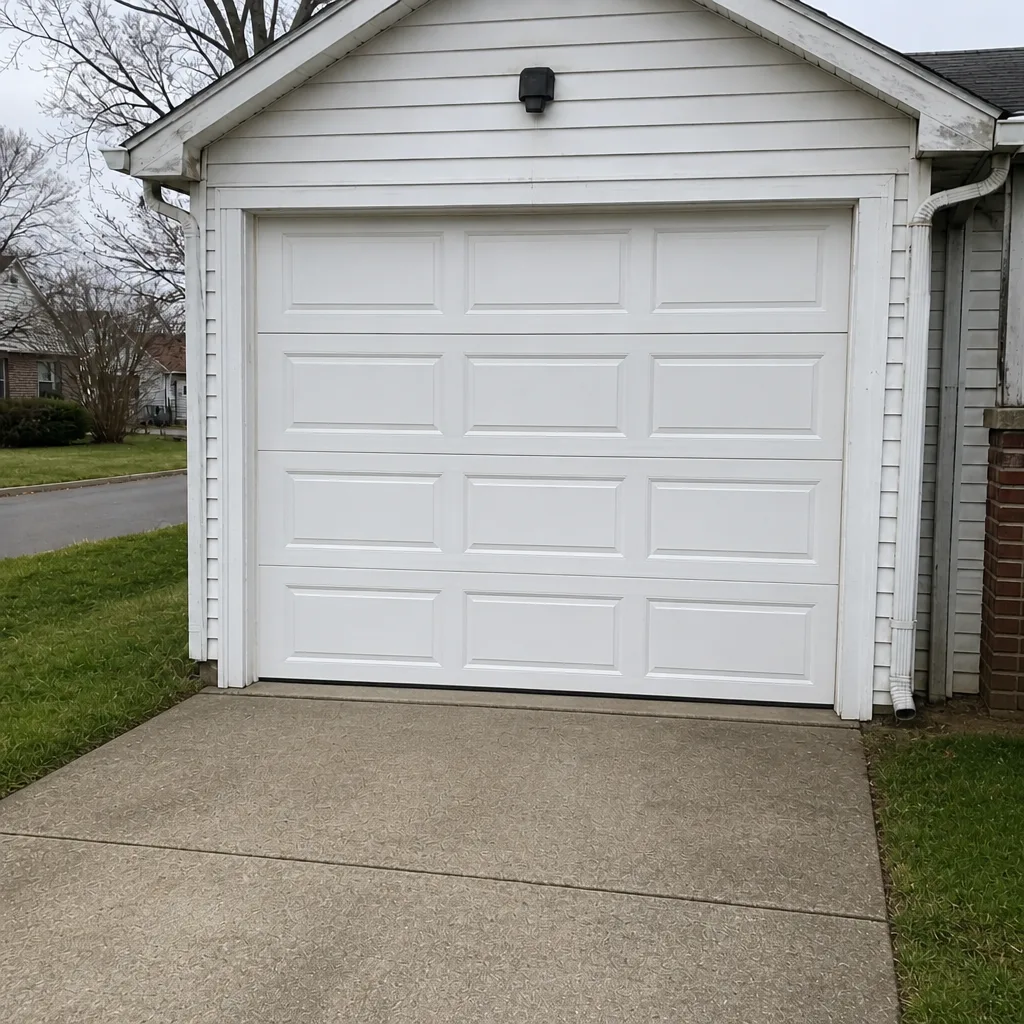 After
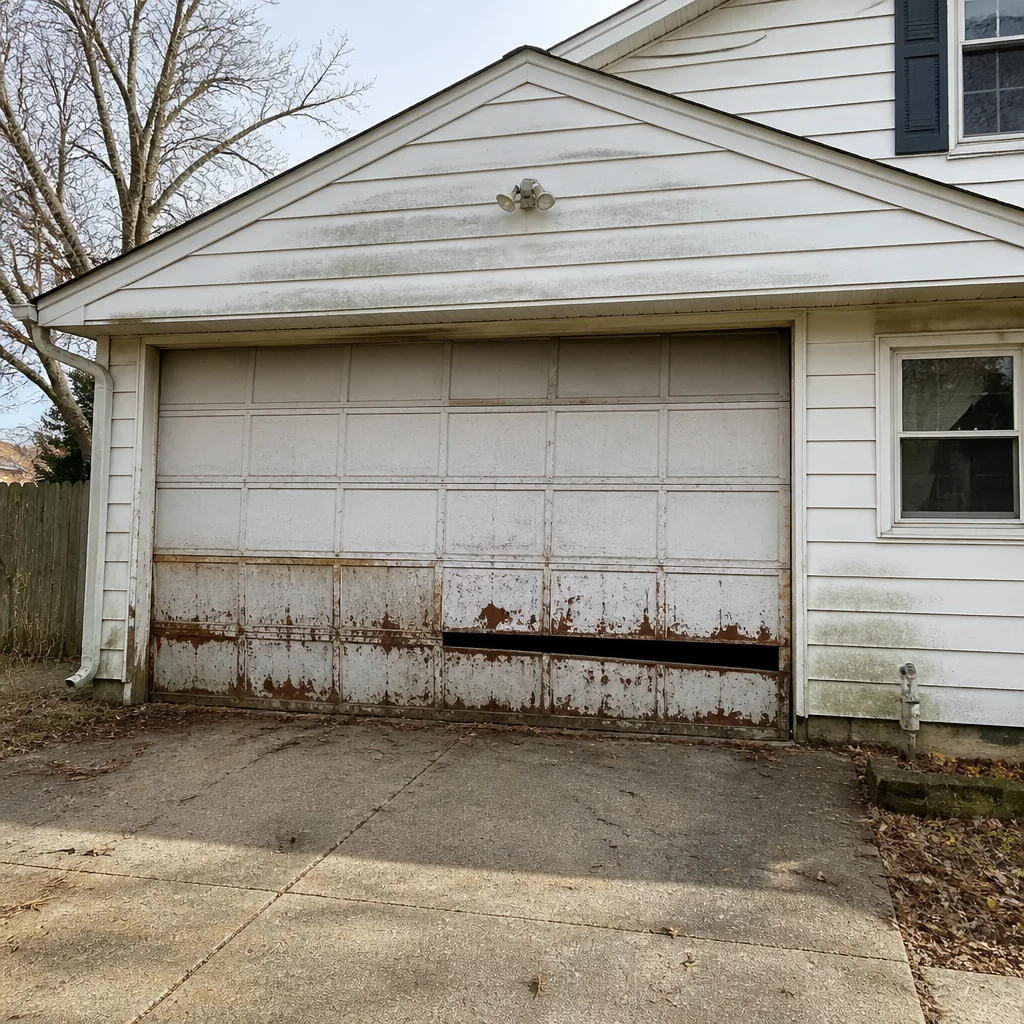 Before
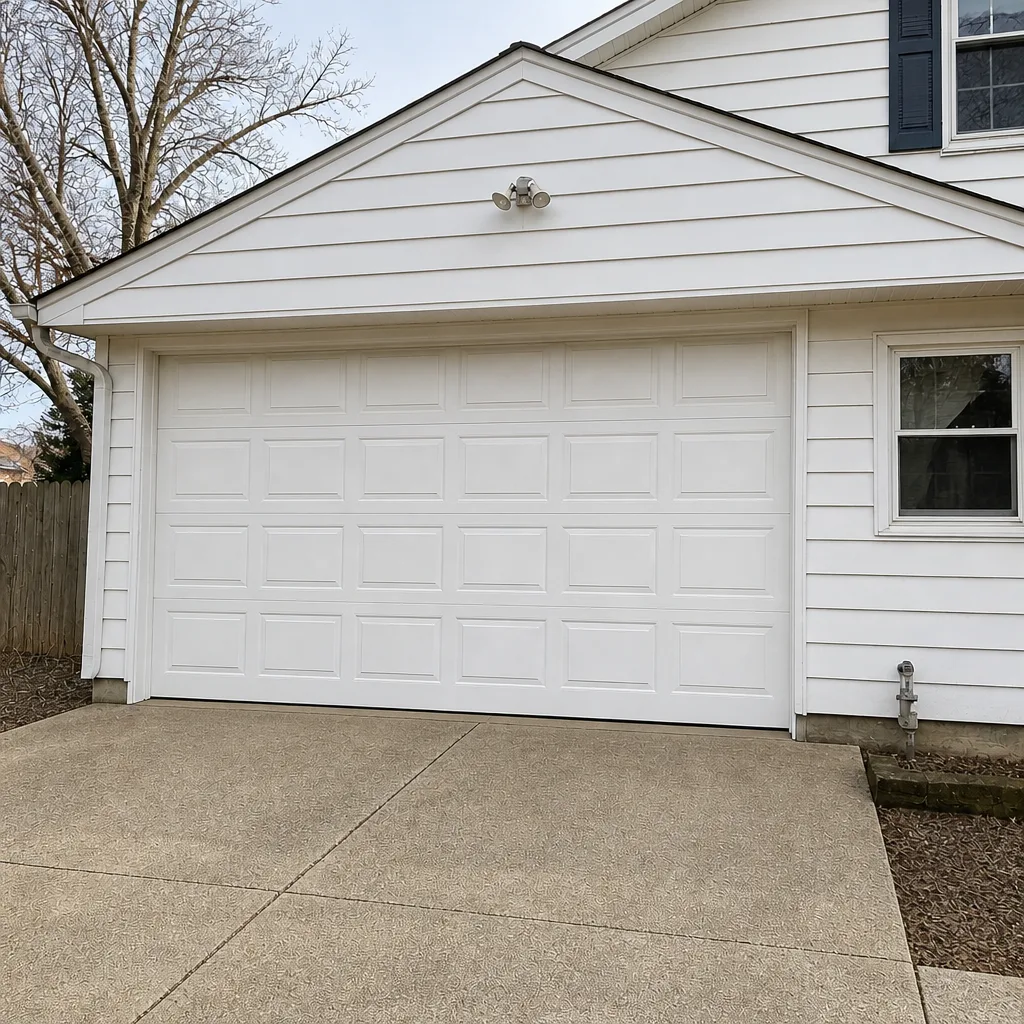 After
When to Call a Professional
Call a professional when the door won’t close flush or hangs unevenly, when you hear a bang from the spring area, when the opener runs but the door doesn’t move, or when the safety sensors won’t stay lined up. Any of those can mean a spring, a cable, an opener board, or a track that’s out of alignment, and springs and cables are not a do-it-yourself fix. Also call when a panel is badly dented or the bottom section has rusted through, because replacement section matching needs the exact model and color. And call before you buy a new door if the old one is repairable, so you can compare the cost of repair against the cost of replacement. Bancroft Garage Door Repair offers free estimates in Albany, call (866) 942-9116. We answer 24/7. Fast dispatch from 7am to 7pm, Sunday through Friday.
Frequently Asked Questions
For most Albany homes, the best value is a three-layer steel door with a polyurethane core from a brand with strong local dealer coverage, and Clopay and Wayne Dalton both fit that description well. Amarr and Raynor make solid doors too, so the deciding factor ends up being steel gauge, insulation, and how fast a replacement section can be sourced. In our experience, homeowners are happiest when parts availability drives the decision, not the brand name on the front. Call (866) 942-9116 for an exact quote, estimates are free.
Polyurethane bonds the inner and outer steel skins into a rigid sandwich that resists the flexing that happens through Albany’s freeze-thaw cycle, which is what keeps the door flat over the years. Polystyrene is lighter and cheaper but doesn’t bond the skins as firmly, so panels are more likely to bow or oil-can over time. The R-value difference is real, but the structural reason is the one that matters in this climate. Call (866) 942-9116 to talk through door options, estimates are free.
We work on all eight of the brands we service, which means most Albany homeowners already own a door or opener we know. That covers LiftMaster, Chamberlain, Genie, Clopay, Amarr, Wayne Dalton, Craftsman, and Raynor. We can diagnose both the mechanical side and the opener and electronic side in the same visit. Call (866) 942-9116 for a free estimate on repairs.
A LiftMaster or Chamberlain opener will physically move a door from any of the major door manufacturers, but the “works with” question depends on weight and smart access. Confirm the opener is rated for the door’s weight, and check the app compatibility list if you want myQ control without an adapter. Raynor’s opener line also uses the myQ platform. Call (866) 942-9116 with your model numbers and we’ll tell you what pairs cleanly. We answer 24/7.
Most warranties cover rust only once it perforates the metal, and they may reimburse material rather than cover the labor to install a new section. Read the perforation clause, check whether bottom-edge rust is excluded as “normal wear,” and confirm whether the finish is covered separately. Keep registration and proof of purchase in a folder. Our garage door repair team can walk you through the language on a specific model. Call (866) 942-9116 for a free estimate on a rust repair.
A full door replacement is measured, ordered, and scheduled, not done on the spot, and it takes about a day on site once the door arrives. What adds time is the order itself: a well-stocked local model can arrive faster than a custom or factory order. The written price is agreed before any work starts, so you’ll know the full scope up front. Call (866) 942-9116 to book a measure. Fast dispatch from 7am to 7pm, Sunday through Friday, closed Saturday.
The Bottom Line
Brand selection for an Albany garage door comes down to three things: polyurethane insulation for a freeze-thaw climate, steel thick enough to resist daily denting, and a local dealer network that can source a replacement section in days rather than weeks. Clopay and Wayne Dalton offer the best combination of those factors for most Albany homes, with Amarr and Raynor as solid alternative picks. Pair the door with a LiftMaster, Chamberlain, or Genie opener matched to its weight and smart-access ecosystem. Then get the written price agreed before work starts. If you’re unsure which door and opener combination fits your home, call (866) 942-9116 for a free estimate. We answer 24/7. Fast dispatch from 7am to 7pm, Sunday through Friday, closed Saturday. Our technicians have up to 13 years of experience across Clopay, Amarr, Wayne Dalton, Raynor, LiftMaster, Chamberlain, Genie, and Craftsman, and we’ll tell you plainly whether your existing door is worth repairing or replacing.
Written by the team at Bancroft Garage Door Repair.