
Last updated November 16, 2026
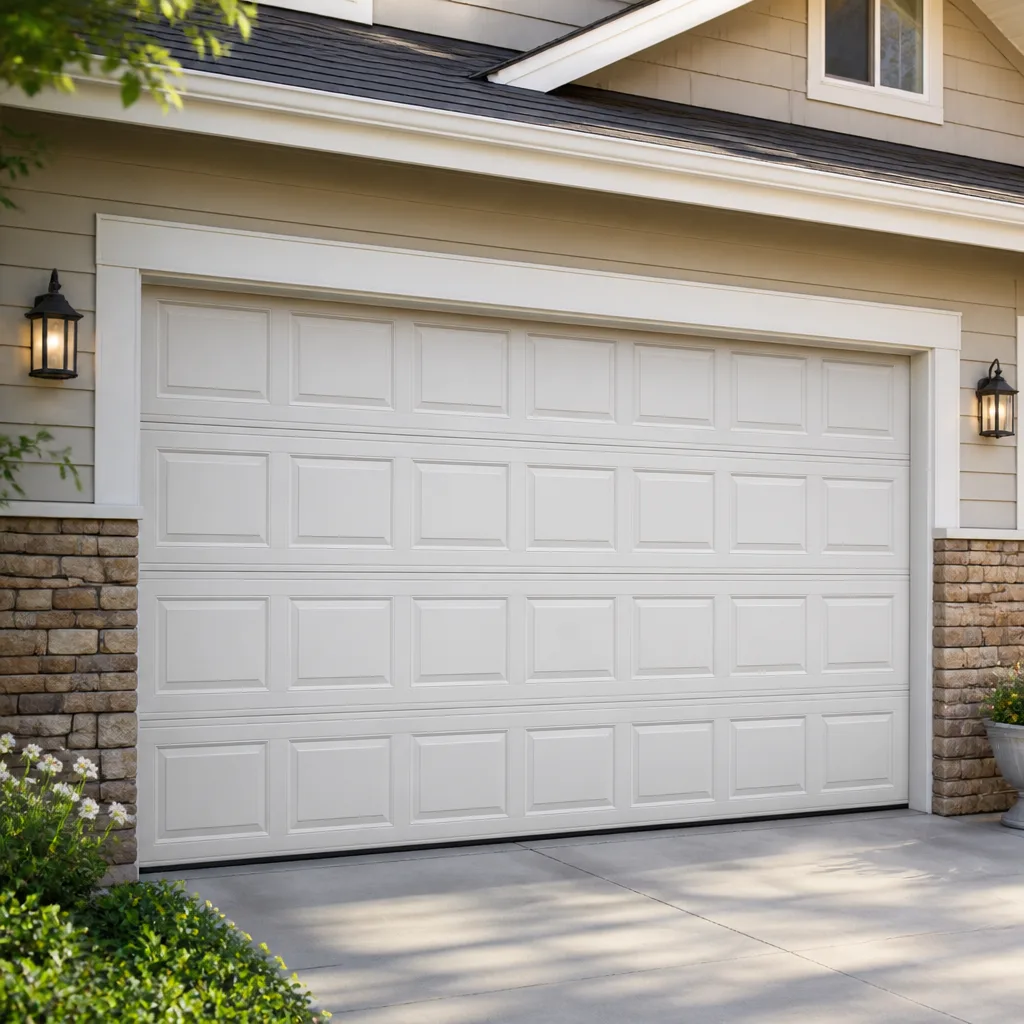 Raised-panel steel
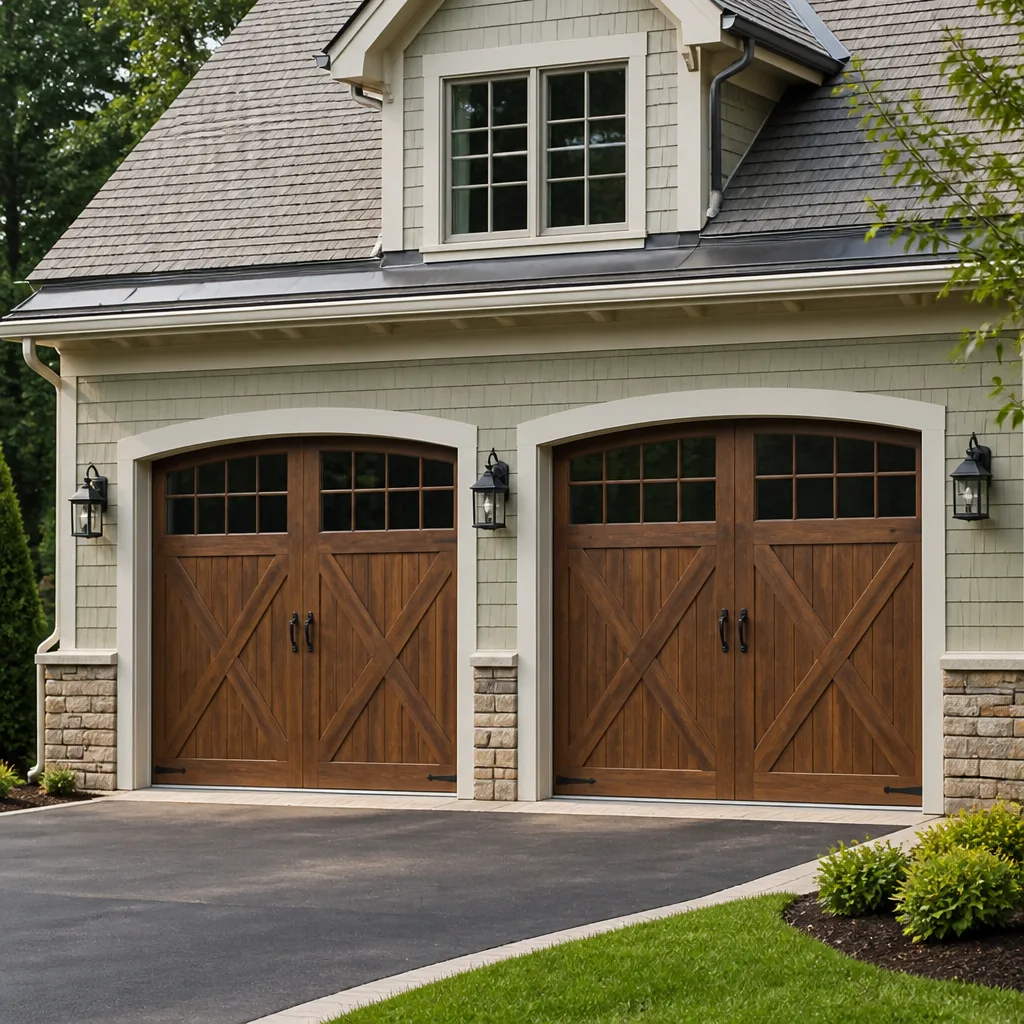 Carriage house
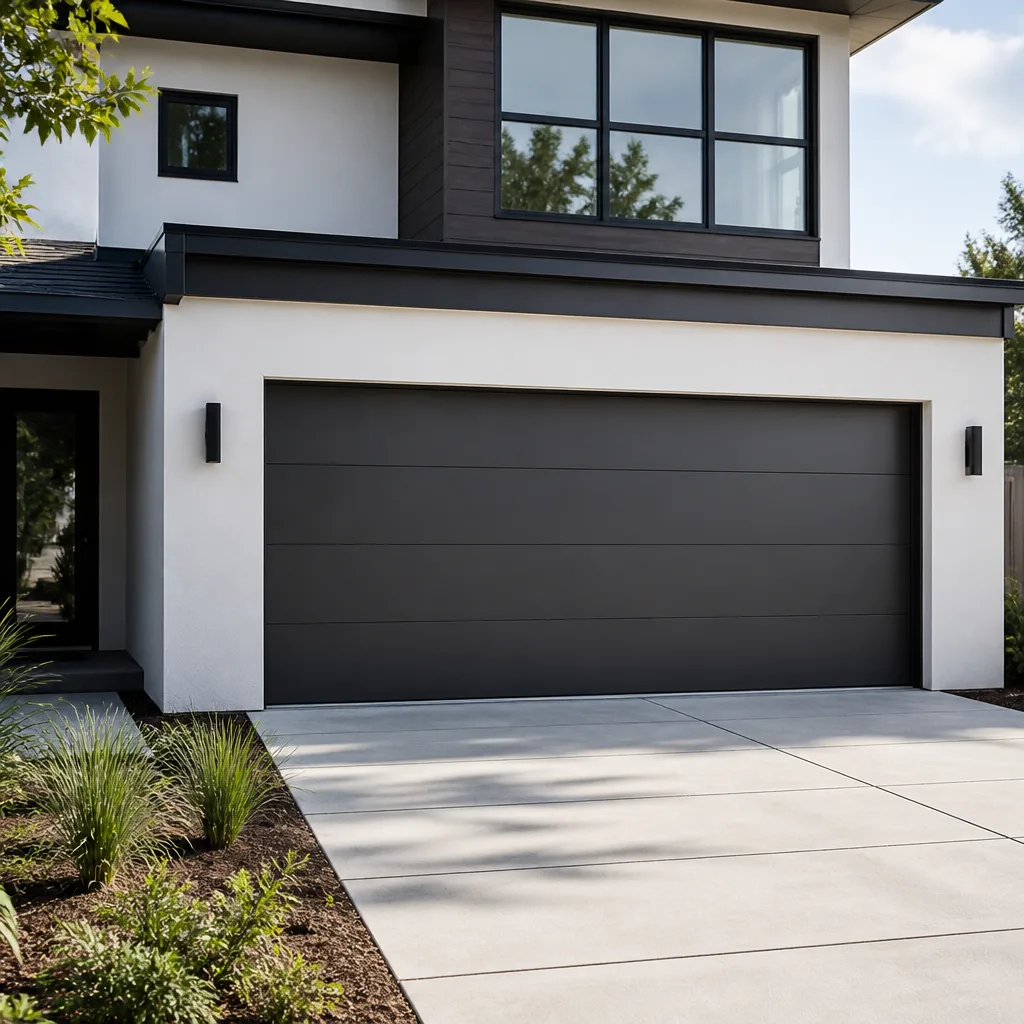 Modern flush
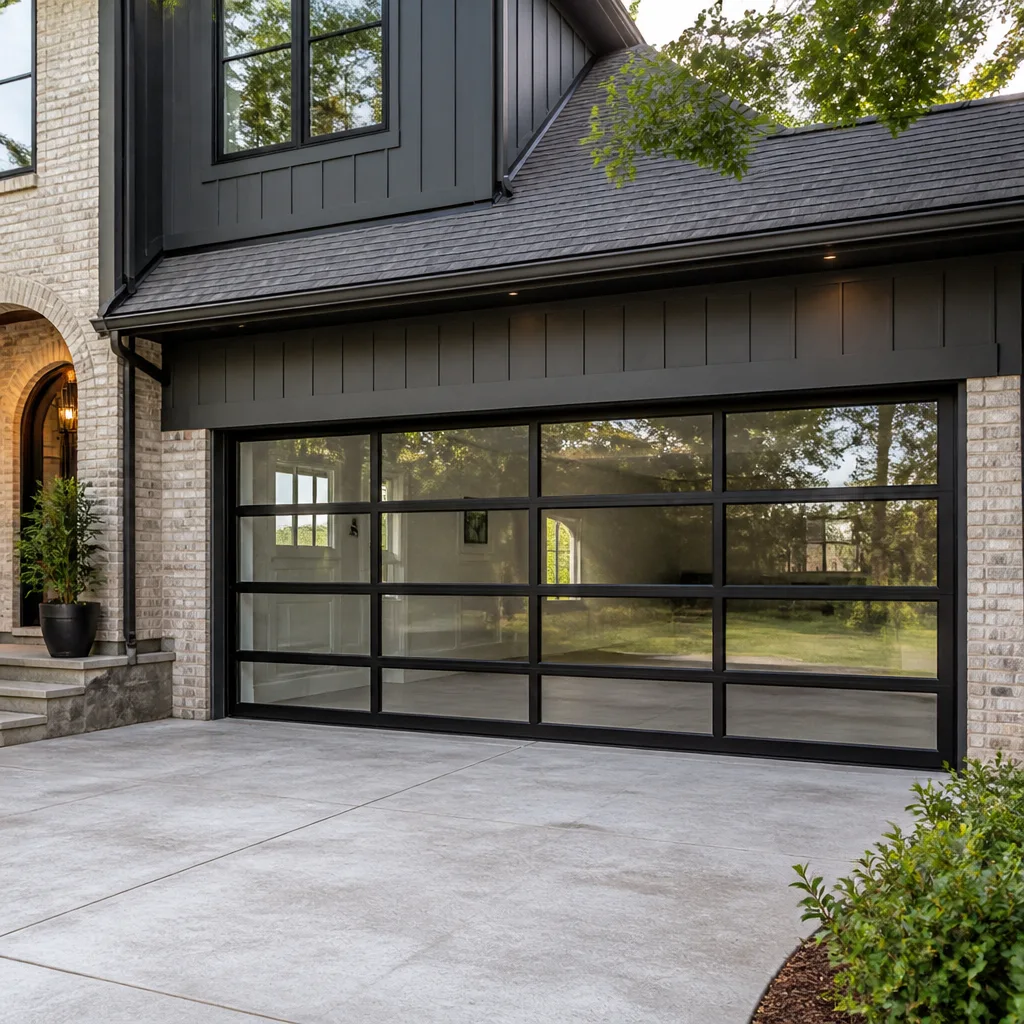 Full-view glass
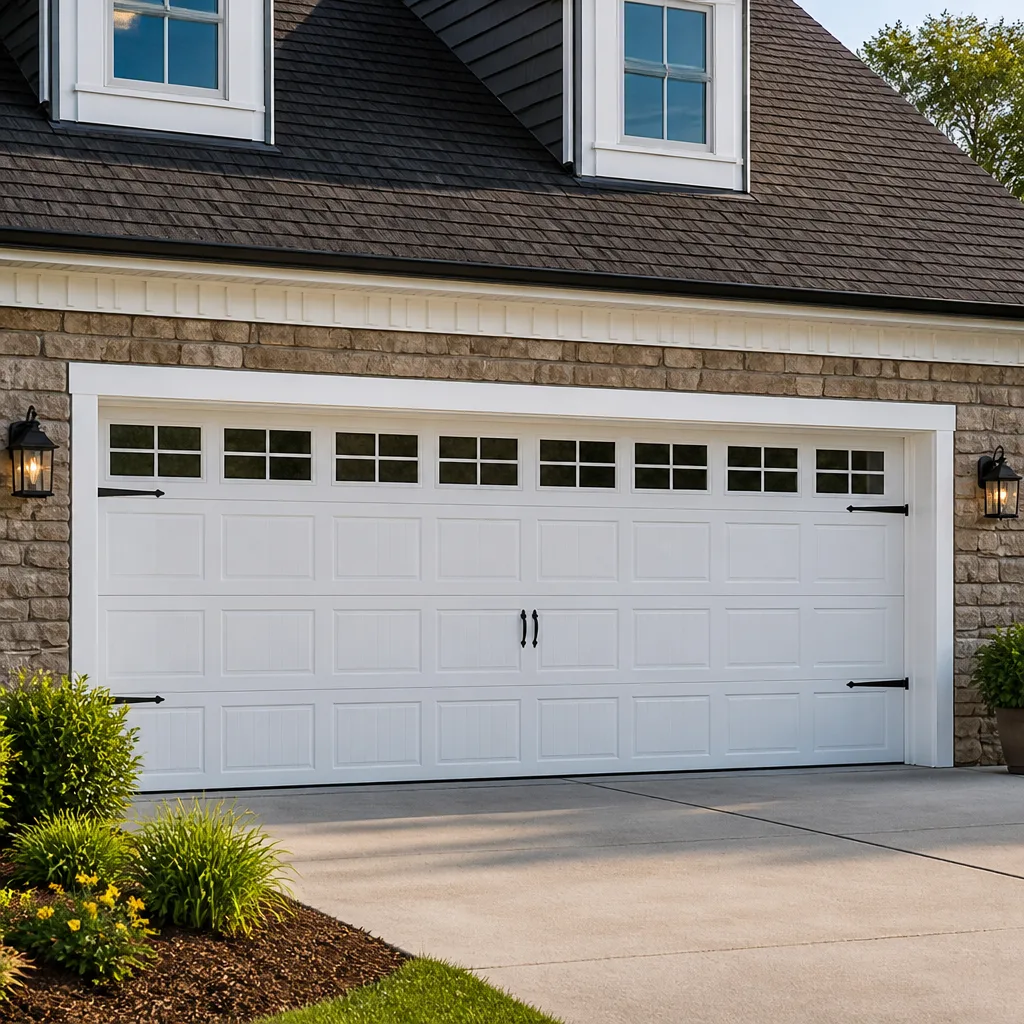 LiftMaster openers
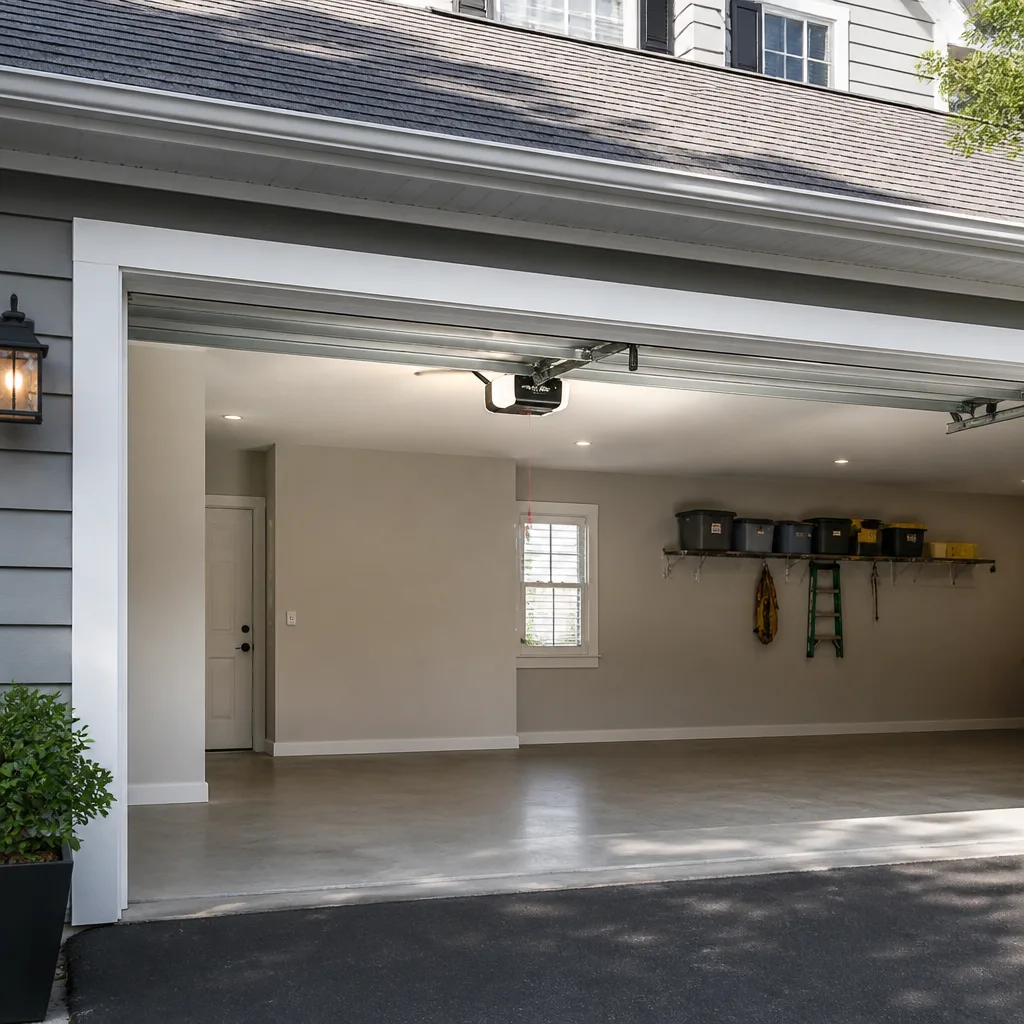 Chamberlain openers
Full 25-point door and opener safety check with every visit - springs, cables, rollers, tracks, and your LiftMaster or Chamberlain opener included
You get a price before we start. It does not change when the pro arrives.
Get your free estimateGarage Door Repair Maintenance Checklist for Albany Homeowners
A loose set screw on a LiftMaster or Chamberlain opener feels the same in October as it does in July. By February, that same loose screw can cause a complete trolley failure at 7 a.m. on a morning when you need to be somewhere. The difference is timing, and Albany homeowners who maintain reactively always find this out the hard way. Garage doors don’t fail on a schedule that suits you. They fail when cold, salt, and freeze-thaw cycles have spent months quietly working on the same brackets, springs, and weather seals. This guide gives you a month-by-month maintenance calendar built around Albany’s actual seasons, brand-specific lubrication advice for torsion springs and opener drives, and a clear line between what you can safely handle yourself and what needs a technician.
Quick Answer
A garage door maintenance checklist for Albany should follow the local weather calendar: deep-clean and lubricate in spring after salt season, check weatherstripping and balance in fall before the first freeze, and inspect springs, cables, and rollers monthly through winter when cold-stress failures peak. Most tasks take 15-20 minutes. Spring, cable, and drum work should always go to a trained technician because those components store enough energy to cause serious injury.
Styles & brands we work with
- Raised-panel steel
- Carriage house
- Modern flush
- Full-view glass
- LiftMaster openers
- Chamberlain openers
Table of Contents
- Why Albany’s climate breaks garage doors differently
- The month-by-month garage door maintenance calendar
- How to lubricate a garage door in Albany (by brand and season)
- Inspecting bottom weatherstripping for freeze damage
- Cable and drum wear indicators on single vs. double-spring doors
- What you can safely do yourself vs. what needs a technician
- Opener and smart-system checks for Albany homes
- The annual deep-check every Albany door should get
Why Albany’s Climate Breaks Garage Doors Differently
Albany sits in a climate that swings hard in both directions. Summers bring humidity that swells wood panels and softens lubricant. Winters bring repeated freeze-thaw cycles that expand ice into the smallest gaps. Road salt tracked onto the apron and splashed onto the bottom section accelerates corrosion on the hinges, bottom brackets, and track fasteners. By the time a homeowner notices, the damage is often structural rather than cosmetic.
Those cycles matter for garage door hardware more than most people realize. Metal expands and contracts at a different rate than the wood or steel panels around it. Springs lose tension gradually as temperatures drop. Grease that flowed freely at 80°F turns tacky near freezing and stops protecting the pivot points it was meant to shield. Weatherstripping that sealed cleanly in October can crack along the fold by January, letting cold air into the garage and pulling heat out of the rooms above or beside it.
In our experience across Albany, the pattern is consistent. Doors installed in the city’s older two-car garages tend to see wear on the same components: bottom brackets, roller stems, and the torsion assembly. Newer construction on the edges of town often has lighter-gauge hardware that’s more sensitive to temperature swing. Either way, the maintenance tasks that prevent failure are the same. What changes is timing and frequency.
If you’re already noticing that the door hesitates, reverses, or runs rough, that’s maintenance turning into repair. Our garage door repair page explains how a technician diagnoses these problems before they compound.
The Month-by-Month Garage Door Maintenance Calendar
Generic checklists say “spring” and “fall.” That’s fine for a mild climate. Around Albany, a door sees four genuinely different workloads across the year, and the tasks should shift with them. This is the calendar we’d hand a homeowner if they asked.
January through March: The deep-freeze stretch
Cold is the stress test. Springs are at their most brittle, and metal brackets can fracture under loads they handled in autumn. Walk out and look at the door once a week. Check that the bottom seal still makes contact with the floor, since ice packed under the door lifts it slightly and lets cold air pour in. Listen for a bang or pop on opening. If you hear one, stop and call a technician. That’s a spring sound, and continuing to cycle the door can cause a cable to snap.
April and May: Salt and grime cleanup
Once the snow clears, the priority is removing what winter left behind. Road salt dries on hinges, tracks, and bottom brackets and starts eating the finish. Rinse the tracks and wipe the hinges with a damp cloth, then re-lubricate. This is also the right time to check panels for dents, rust, or bubbling paint. If you have a Clopay, Amarr, Wayne Dalton, or Raynor door, look along the bottom section and the seams between panels, where moisture collects and corrosion begins.
June through August: Heat and humidity checks
Warm months are when balance problems show up. If the door slams down or feels heavy on the way up, the spring tension may have drifted out of spec during winter and is only now becoming obvious. Lubricate the rollers, hinges, and opener rail lightly. Humidity also softens wood frame trim, so check for swelling around the opening that could bind the door edge.
September and October: The pre-freeze pass
This is the most important maintenance window in Albany. Check bottom weatherstripping for cracks and confirm it seats fully against the floor before temperatures drop. Lubricate the torsion spring and the opener chain or belt with the right product for cold weather. Have a technician check spring tension and cable wear before ice cold sets in. Catching a worn cable in October is far easier than dealing with it in a February driveway.
November and December: The last check before winter
Run the door through three or four full cycles and watch for hesitation. Test the opener’s safety reverse by placing a roll of paper towels under the door and hitting the close button. Hinges and rollers should move quietly. If anything sounds dry, this is the time to lubricate, not after a cold snap has already locked things up.
How to Lubricate a Garage Door in Albany (by Brand and Season)
Lubrication is the single most effective maintenance task a homeowner can do, and it’s also the one most often done wrong. The wrong product, or the wrong interval, does more harm than good. Here’s what we’d say to a neighbor in Albany who asked how to do it properly.
Which lubricant goes where
- Torsion spring: use a lithium grease or dedicated spring lubricant. Never use silicone spray on a torsion spring, because it won’t stay put through freeze-thaw cycles.
- Hinges and pivot points: a lithium or white grease applied to the pivot, not the hinge plate.
- Rollers: a few drops of silicone spray on the stem. Nylon rollers need less lubrication than metal ones and can be left mostly alone.
- LiftMaster or Chamberlain chain drive: chain lubricant on the chain, and never grease on the rail itself.
- LiftMaster or Chamberlain belt drive: no lubrication required on the belt. Keep it clean and check its tension once a season.
- Tracks: clean the track with a damp cloth. Don’t grease it, because grease attracts grit and grime that causes binding.
Seasonal intervals
- Spring (April): full lubrication pass on hinges, springs, rollers, and opener drive.
- Summer (July): light touch-up on hinges and rollers, and check that no grease has migrated.
- Fall (October): the important pass. Torsion spring, chain, and hinges get fresh grease that will hold through winter.
- Mid-winter (January): only if the door starts groaning. In sub-zero temperatures, less is more, because excess grease hardens and can bind.
Our technicians have up to 13 years of experience with every one of the eight brands we work on, and the lubrication pattern for a LiftMaster chain drive is different from a Craftsman belt drive in ways that matter. Getting the drive type right the first time saves you from tracking down a slow, dry chain in mid-January.
Inspecting Bottom Weatherstripping for Freeze Damage
Albany bottom seals take a beating. Between road salt, plowed slush, and freeze-thaw cycles, the rubber or vinyl strip along the bottom of the door is often the first component to fail. When it does, you’ll notice it two ways: cold air leaking into the garage in winter, and water pooling on the garage floor after rain or a thaw.
Here’s how to inspect it properly. Close the door fully and look at the seal from the inside with the garage light on. Any daylight visible under the door means the seal isn’t making contact. Then feel along the length of the seal with your hand. Cracks, stiffness, or hard spots indicate that the rubber has dried out and lost its ability to bounce back. Press the seal lightly in a few spots. If it stays compressed instead of springing back, it needs replacing.
Albany freeze damage also shows up as tearing along the fold where the seal wraps around the bottom section. Water seeps behind the fold during a thaw, then freezes and rips the material. If you see splits along the fold, order the replacement before the next cold stretch. A seal that fails in November causes a heat-loss problem all winter, and it lets meltwater drip under the door where it refreezes and stresses the door’s hinges.
Replacing bottom weatherstripping is one of the more approachable homeowner tasks, but it needs to match your door’s specific bottom section. Panels on a Wayne Dalton or Raynor door take a different seal profile than a generic one, and getting the fit wrong leaves the same gap you had before. If you’re not sure which profile your door takes, a quick check with a technician is faster than buying the wrong part twice.
Cable and Drum Wear Indicators on Single vs. Double-Spring Doors
The cable and drum system carries the full weight of the door. When it wears, the failure is dramatic and dangerous. Two things matter for Albany homes: how to spot wear early, and how the check differs between single-spring and double-spring setups, which are both common on two-car doors around the city.
What to look for on any door
- Frayed strands: look at the cable where it wraps the drum. Even one broken strand means the cable is compromised.
- Rust pitting: salt exposure causes pitting that weakens the cable from the outside.
- Cable slack or uneven tension: if one cable looks looser than the other when the door is closed, the drum or cable has an issue.
- Drum scoring: a drum with visible grooves or a raised lip is worn and needs replacement.
- Bottom bracket wear: check for rust and for cracks at the point where the cable attaches.
Single-spring doors
A single torsion spring handles the full load through one shaft and one cable path. Wear on the cable tends to appear on the side nearest the spring, because that side carries more of the tension during the lift. Look at the cable on that side first, and give it a firm but careful look at the drum wrap. Do not tug it, and do not try to adjust it.
Double-spring doors
Two springs split the load, but they can wear at different rates. If one spring has lost tension faster than the other, the door will lean or bind on one side, and the cable on the weaker side wears faster. Run the door and watch the gap between the door and the track on each side. Any difference, or any horizontal drift, means the spring pair needs professional evaluation.
Here’s the part that matters most. Cables are under extreme tension, and the bottom bracket is one of the most dangerous parts on the entire door. Never try to adjust, reattach, or replace a cable or bottom bracket yourself. If you notice any of the wear indicators above, call a technician. Our Bancroft Garage Door Repair team handles cable and drum replacement as routine work, and the price is set by a written estimate before we start.
What You Can Safely Do Yourself vs. What Needs a Technician
Most maintenance checklists lump every task into “hire a pro” as a liability cover. That’s unhelpful. Here’s an honest split, with the reason each item falls where it does.
Safe for homeowners
- Visual inspection. Looking for cracks, rust, wear, or daylight under the door involves no danger.
- Lubrication of hinges, rollers, and opener chain. No stored energy is involved if the door is fully closed and the opener is unplugged.
- Cleaning tracks and wiping salt residue. No risk, real payoff.
- Testing the opener’s safety reverse. A simple check with a paper towel roll under the door.
- Replacing bottom weatherstripping. The door stays closed, no springs or cables are touched. Fit matters, so get the right profile.
- Wiping down panels and touching up small rust spots. Cosmetic work that prevents bigger problems.
Needs a technician
- Any work on torsion springs. These store enough energy to cause serious injury if they release unexpectedly. A snapping spring can also send debris flying. This is not a check you diagnose and fix yourself.
- Cables, drums, and bottom brackets. All are under live spring tension even when the door appears to be at rest.
- Track alignment. A minor-looking bend can bind the door and stress the opener. Adjusting tracks to a square without the right gauge is a guess.
- Opener board or sensor faults. Diagnosing a LiftMaster or Chamberlain control board requires the right meter and brand-specific knowledge.
- Panel replacement when the door is out of balance. If a panel is being swapped, the balance needs to be reset with the new weight.
- Anything the door tells you is wrong under load. If it hesitates, jerks, or binds, stop and call. A technician diagnoses both the mechanical and electrical side in one visit, so nothing is guesswork.
Most homes around Albany already have a door or opener we know. That includes Wayne Dalton, Craftsman, Raynor, and LiftMaster systems, which makes diagnosis faster and more accurate when you do need professional help.
Opener and Smart-System Checks for Albany Homes
Openers are where maintenance seems invisible until it fails. An opener runs a small motor, a drive system, and a set of sensors. In Albany’s humid summers and cold winters, all three take stress, and the failure modes are specific.
Monthly checks
- Safety reverse test. Put a roll of paper towels under the closing door. If the door doesn’t stop and reverse, the sensors or the opener logic need attention.
- Sensor alignment. Both photo-eye lenses should glow steadily, not blink. If one blinks, clean both lenses and check alignment before assuming the opener is failing. Cold weather can shift a sensor slightly.
- Remote range. If you have to press the remote several times from close range, the battery or the opener’s receiver is weak. New batteries fix this most of the time.
Seasonal checks
Every spring and fall, check the opener’s drive system. LiftMaster and Chamberlain belt-drive units rarely need adjustment, but chain drives need the chain tension checked since cold weather can change it. Craftsman and LiftMaster wall-mounted units don’t have a rail, but they do have a control board and a manual release that should be tested once a season. In smart openers, verify that any connected app can still open the door and that firmware updates haven’t broken the wireless connection.
If your opener is groaning, reversing unexpectedly, or refusing to respond to the remote, the problem is often a worn gear, a failing capacitor, or a bad control board. Those are the exact faults that our garage door opener repair team diagnoses on LiftMaster, Chamberlain, Genie, and Craftsman systems without trial-and-error parts swapping.
The Annual Deep-Check Every Albany Door Should Get
Once a year, beyond the monthly and seasonal tasks, a garage door benefits from a full balance and hardware check. This is the task worth having a technician do, because it involves testing the door under load and evaluating spring tension, cable wear, and track alignment together.
Here’s what a proper annual check covers:
- Balance test. Disconnect the opener and lift the door halfway. It should stay in place. If it drops or rises, the springs need adjustment.
- Full-cycle inspection. Run the door through several cycles and watch for hesitation, noise, and lateral movement.
- Spring tension check. Both extension and torsion springs are assessed for fatigue and stored energy.
- Cable and drum inspection. All cables are checked for fraying, and drums are assessed for wear.
- Hardware torque check. Hinges, brackets, and roller stems are tightened to spec, which prevents the slow loosening that causes trolley failures.
- Weather seal and frame check. Bottom weatherstripping, side seals, and frame condition are reviewed for the coming freeze.
Albany’s weather makes this annual check less optional than it is in a mild climate. The difference between a quiet, reliable door in February and a failed one usually comes down to whether the pre-freeze pass got done in October. If you’re planning a replacement rather than another season of repairs, our installation team can also guide you through matching a door brand to your home and existing opener.
Common Mistakes to Avoid
- Greasing the tracks. Grease on tracks collects grit and causes binding. Tracks should be cleaned, not lubricated.
- Using the wrong lubricant on the torsion spring. Silicone spray doesn’t survive Albany freeze-thaw cycles. Use a lithium or spring-specific grease.
- Testing the safety reverse only in summer. The safety reverse can pass warm and fail cold. Test it in January too, when sensors and mechanical parts are at their most stressed.
- Adjusting spring tension without training. We’ve seen more damage from homeowner spring adjustments than from springs that were never touched. Torsion springs store enormous energy, so leave this to a technician.
- Ignoring a small crack in the bottom seal. A crack in October becomes a full tear by January and lets meltwater freeze under the door. Replace it before the cold.
- Assuming a rough-running door is an opener problem. Many “opener failures” are actually binding from track misalignment, worn rollers, or a door out of balance. Diagnose both the mechanical and the electrical side before buying a replacement opener.
- Deferring maintenance to inconvenience. A door that hesitates, grinds, or runs unevenly is asking for service. Putting it off always costs more, in February more than in May.
See the difference
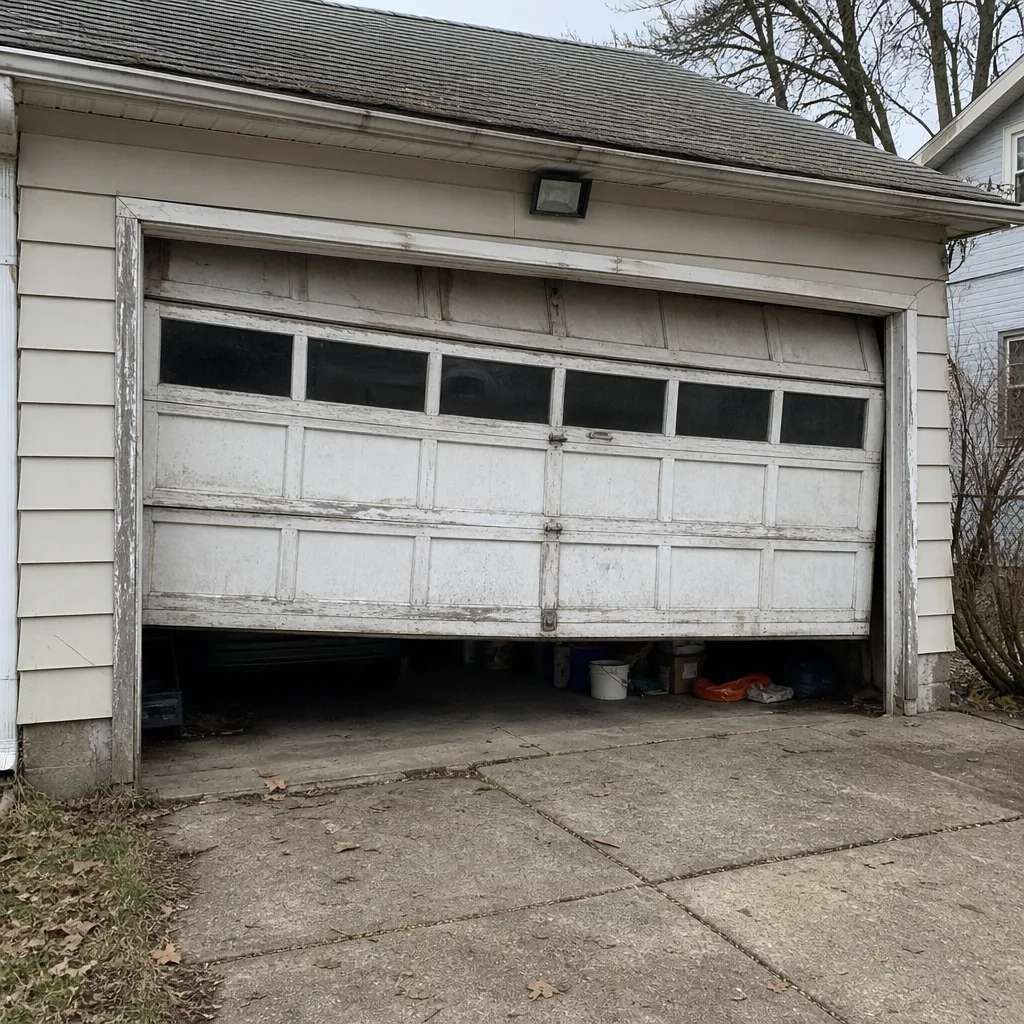 Before
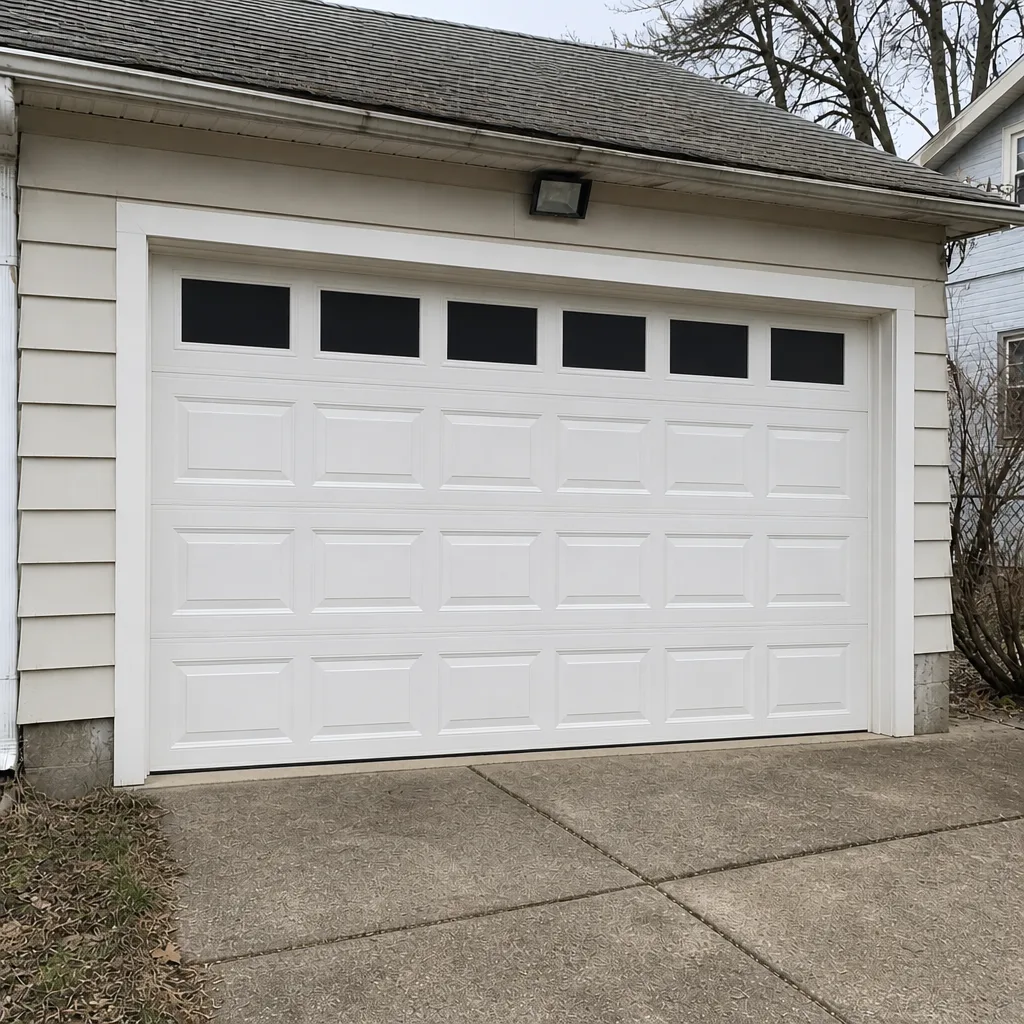 After
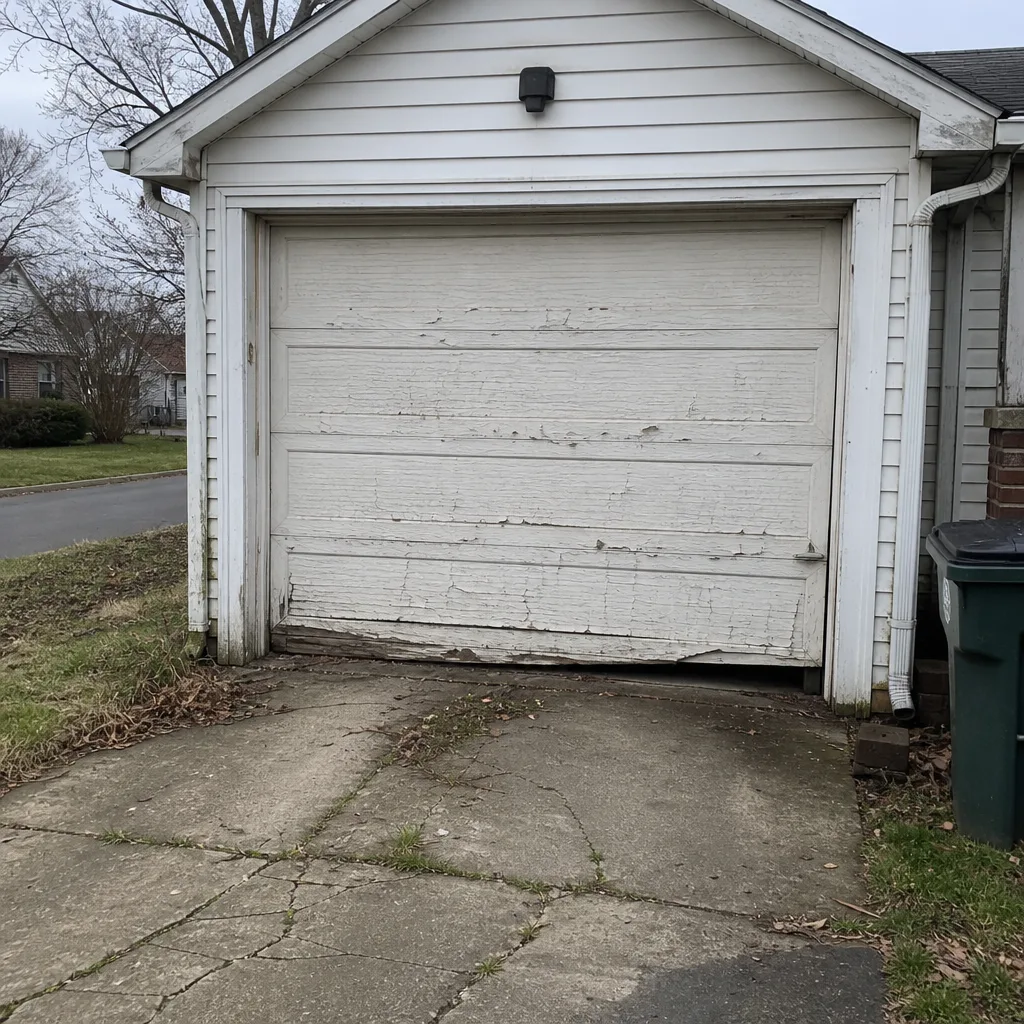 Before
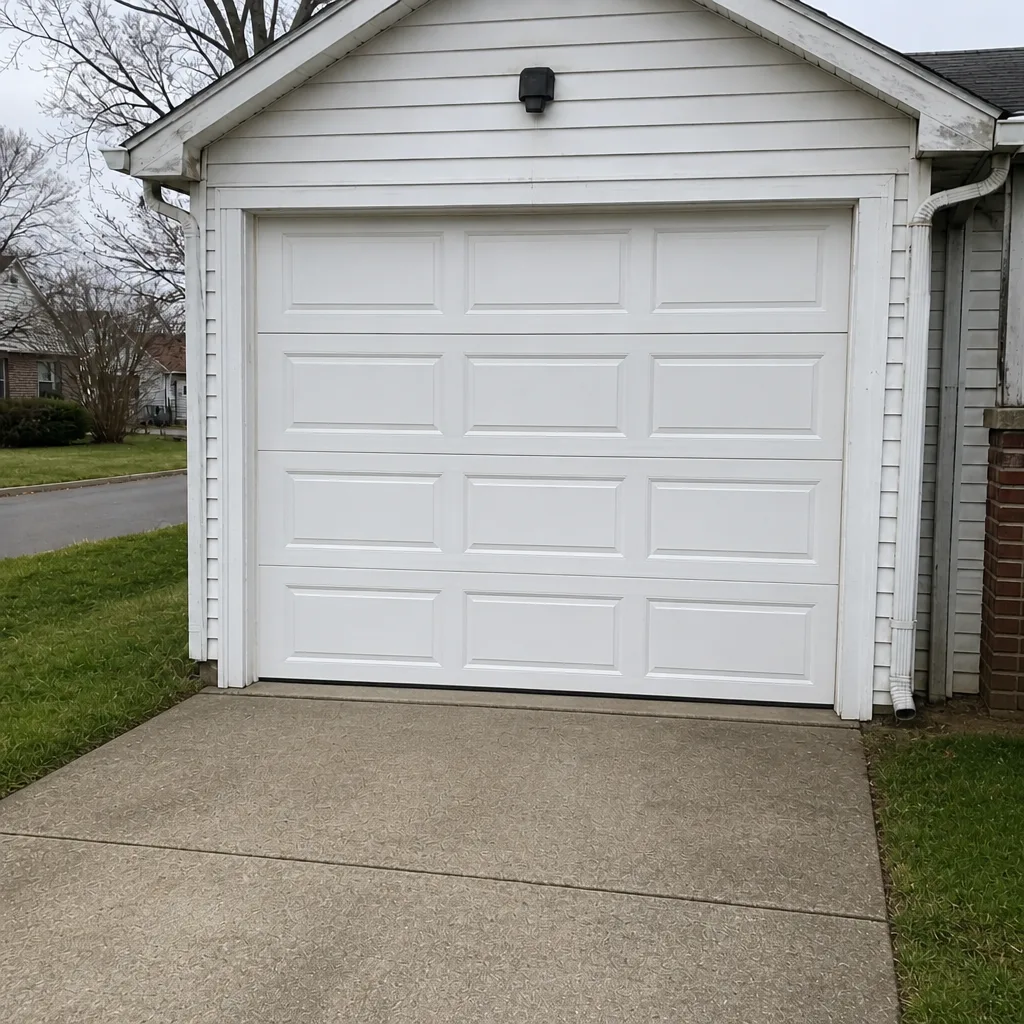 After
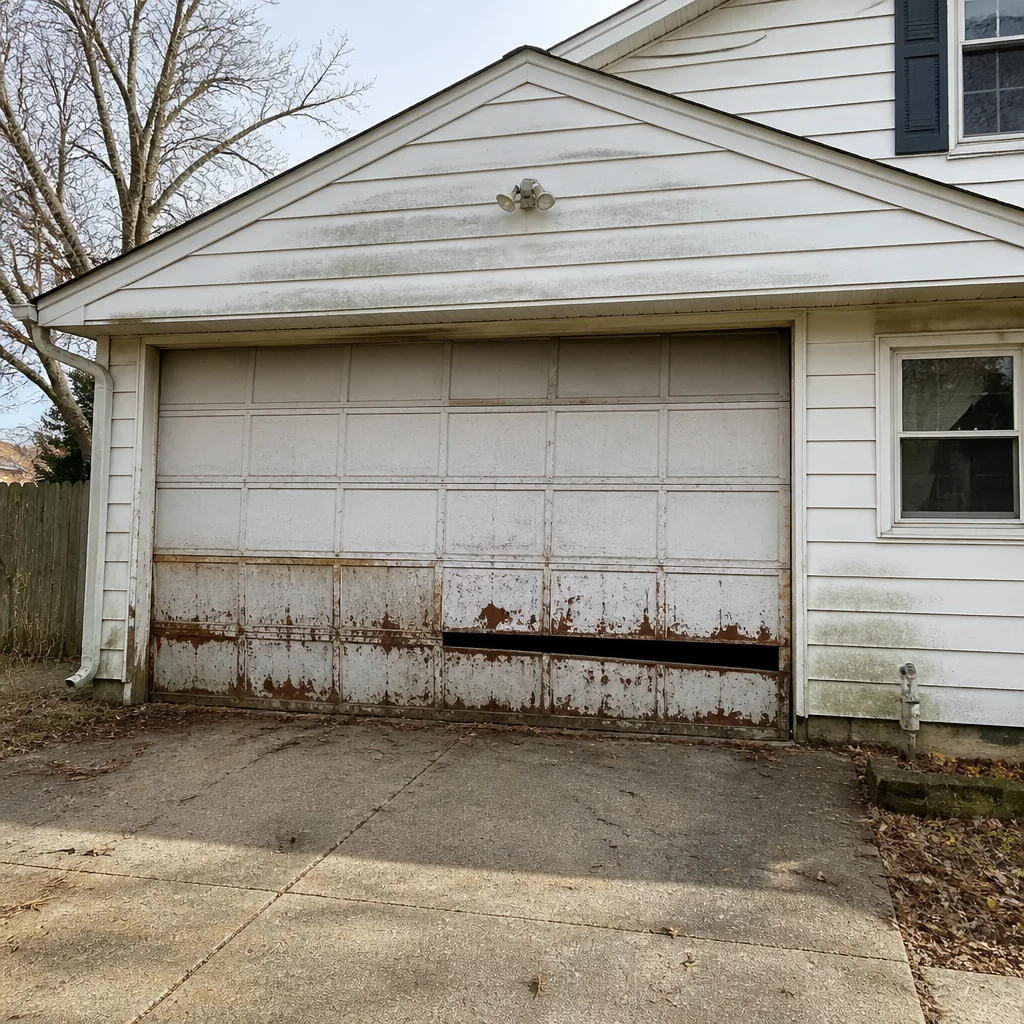 Before
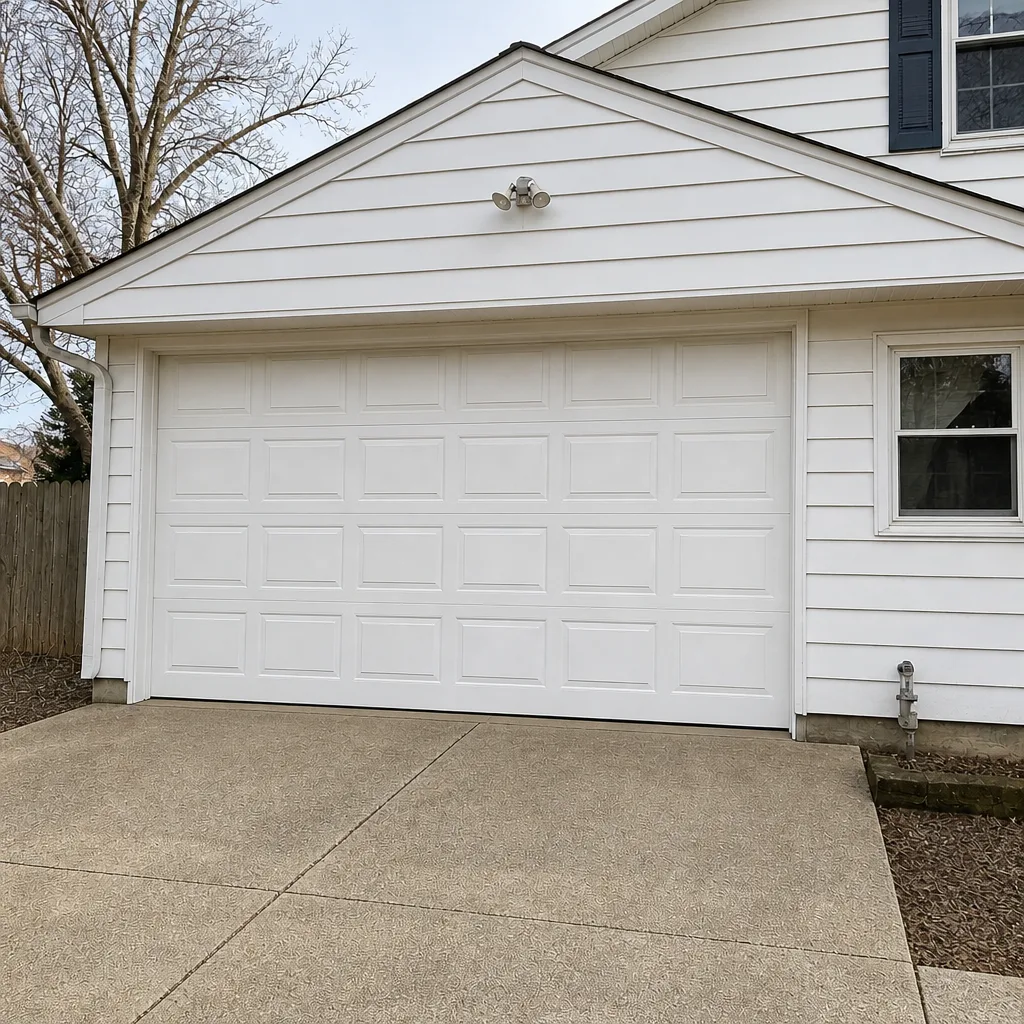 After
When to Call a Professional
Call a technician the moment any of these show up: a bang or pop when opening the door, a spring that looks stretched or twisted, visible cable fraying, a door that reverses for no clear reason, an opener whose safety reverse fails, or a door that leans or binds on one side. Any work involving springs, cables, drums, or the bottom bracket is professional work because those parts store enough force to cause serious injury. Electrical faults in the opener, like a control board that won’t respond, also call for a technician with the right meter. If you’re not sure whether your maintenance issue is urgent, describe it over the phone. Bancroft Garage Door Repair offers free estimates in Albany – call (866) 942-9116. We answer 24/7, and fast dispatch runs from 7am to 7pm. The price is quoted and agreed before any work starts.
Frequently Asked Questions
Lubricate hinges, rollers, and the torsion spring at least twice a year, ideally in April and October, with a light touch-up in mid-summer. The fall pass is the most important because it’s what carries hinges and springs through the freeze-thaw stretch. If the door starts groaning in January, use a small amount rather than a heavy coat, since excess grease hardens in cold.
No. Garage door springs store enough energy to cause serious injury if they release unexpectedly. That’s why spring replacement is always a technician job, even when the door looks simple. Call (866) 942-9116 for an exact quote – estimates are free.
A single-spring door wears unevenly on the side nearest the spring, so that cable needs the closest inspection. A double-spring door splits the load but can wear at different rates on each side, which shows up as the door leaning or binding. On either setup, watch for uneven tension when the door is closed, and call a technician if you see it.
Close the door and look from inside with the garage light on. Daylight under the door means the seal isn’t making contact. Feel along the seal for cracks, stiffness, or hard spots, and check the fold where the seal wraps the bottom section. Damage there is Albany freeze damage, and it should be replaced before the next cold stretch.
No. The written estimate sets the price. We inspect the door, quote the work, and agree on the price before anything starts. If we find something unexpected during the job, we stop and explain before touching it.
Yes. Our technicians are state-licensed, insured, and bonded, and they have up to 13 years of experience across the eight brands we service: LiftMaster, Chamberlain, Genie, Clopay, Amarr, Wayne Dalton, Craftsman, and Raynor. Call (866) 942-9116 for a free estimate.
The Bottom Line
Garage door maintenance in Albany is really a seasonal calendar, not a one-time checklist. Clean salt and grime in spring, lubricate with the right product before the first freeze, inspect weatherstripping for damage from thaw cycles, and watch cable and drum wear through winter. Anything involving springs, cables, drums, or a bottom bracket is a technician job, and it’s worth having that annual balance check done every year before October. If the door is hesitating or making noise now, that’s your cue. Get it looked at before the next cold stretch, not after. Our team at Bancroft Garage Door Repair handles repair, opener service, and full installation across all eight brands, so whether you need a quick diagnosis or a replacement plan, you’re talking to someone who already knows the equipment. Call (866) 942-9116 for a free estimate. We answer 24/7, with fast dispatch from 7am to 7pm, Sunday through Friday.
Written by the team at Bancroft Garage Door Repair.